

How AI is changing the restructuring industry
This episode was recorded in German.
Proven approaches for anyone who wants to lead their company out of a crisis before it's too late
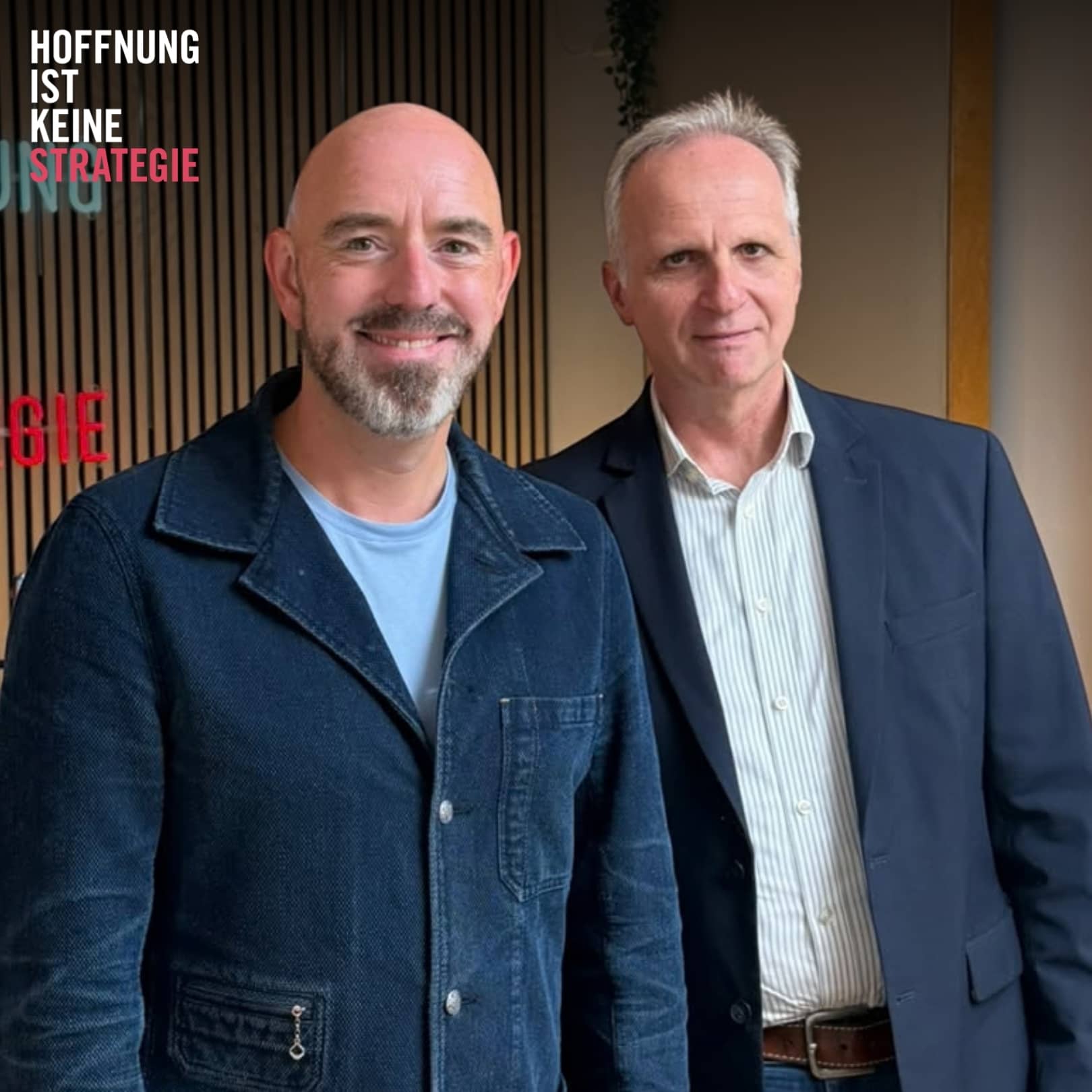
At a time when many German industrial companies are struggling, it isn't enough to wait and hope the situation improves on its own. Restructuring is a discipline of its own with its own rules: faster, harder and more unforgiving than classic strategy work. Martin Hagedorn, Partner at Tradizio and a specialist in restructuring, post-merger integration and carve-outs in B2B industries, explains on our podcast what really matters when the pressure rises.
Restructuring: when time and money run short
In normal operations, you can approach strategic questions calmly and systematically, talk to customers and suppliers, and discuss investments with your lenders. In restructuring, all of that falls away. "There, I usually have neither much time nor much money, otherwise I wouldn't be in restructuring in the first place," Martin Hagedorn explains. Banks want to know whether they'll get their loan back, suppliers whether their invoice will be paid. There's no room left for long-term strategic debate.
The early warning signals that get ignored too often
Long before a company actually slides into a turnaround situation, the warning signs are there to see. Rising customer churn with flat revenue, shrinking margins because of more new customers, more quotes needed to win the same order: according to Martin Hagedorn, these are all indicators you can read internally in your own numbers. His advice: take a calm, detailed look at your competitive position once a year. Do that consistently, and you'll rarely end up in a real liquidity crisis.
The 110 percent approach: numbers that have to be right the first time
One of the core rules from Martin Hagedorn's practice: the analysis at the start of a restructuring has to hold up, because it gets shared with shareholders, managing directors, banks and suppliers. "You can't say, I miscalculated, today I'm coming in with different numbers than yesterday," says Martin Hagedorn. On that basis, pragmatic immediate measures are derived following the 80-20 principle, and not only once the full analysis is complete, but in parallel with execution.
Listening before numbers: why the first interviews decide everything
Before the work on the numbers begins, Martin Hagedorn starts with interviews, and simply listens, even when the first answer is followed by 20 to 30 seconds of silence. Often that's when information surfaces that nobody had said out loud before, because old disappointments and conflicts have built up inside the company. External advisors have a clear advantage here: they don't carry the injuries of the past with them and can credibly say that from now on, everyone looks forward.
AI as a tool, not a replacement for experience
Artificial intelligence is noticeably changing the work in restructuring too. Simple research tasks barely get billed separately anymore, because they can be handled with a prompt. AI increasingly helps with financial models as well, but only because experienced advisors can still check the results themselves. With more complex concept documents that need a clear structure and storyline, Martin Hagedorn says AI still hits its limits. His team sees an advantage here over classic, pyramid-structured consultancies: their real value lies in speed, focus, conflict management and close human communication, capabilities that aren't so easy to automate.
An invitation to act
For managing directors and shareholders of mid-sized companies who sense their situation is getting tighter, this episode delivers concrete food for thought, from the first warning signals to the question of how a turnaround becomes a real growth story again.
Get inspired and find out how to put your company back on the right track in time, instead of acting only when it's too late.
🚀 Listen to the podcast episode now and learn how to recognize when it's time to pull the ripcord!
SHOW NOTES
Martin Hagedorn https://www.linkedin.com/in/martin-hagedorn/
Christian Underwood https://www.linkedin.com/in/christianunderwood/
Strategic Decision Intelligence: https://strategicdecisionintelligence.ai
"Hope Is Not a Strategy" magazine https://shop.strategyframe.ai/products/hoffnung-ist-keine-strategie-ii-1-strategic-decision-intelligence
All links https://linktr.ee/strategyframe