

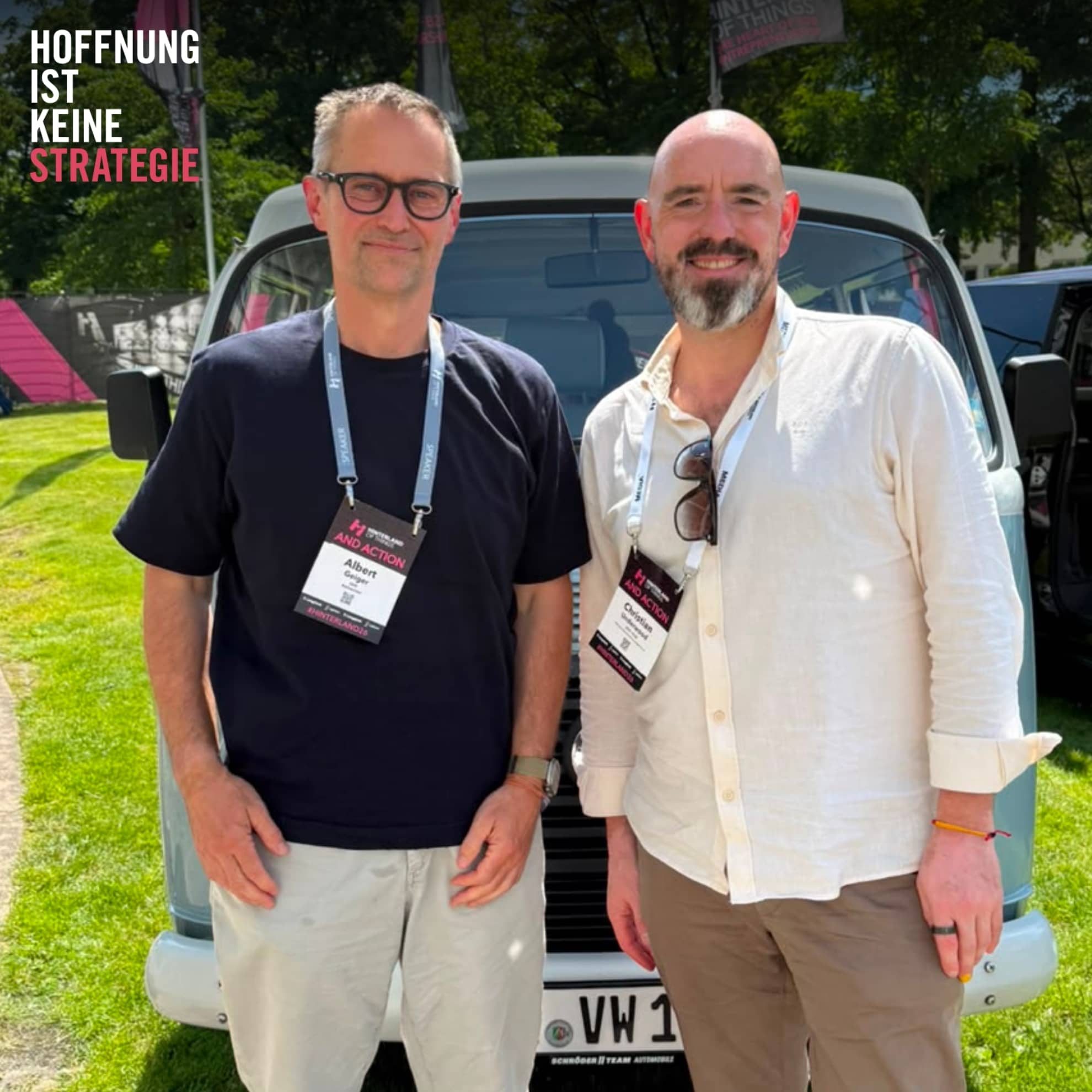
From son to CEO: What nobody told me about my own succession
This episode was recorded in German.
Hoping for the best isn't enough: A recipe for successful business succession
In many family businesses, succession is treated like a force of nature: you wait and hope it somehow works itself out. Albert Geiger, head of Alphazirkel, arguably the most important and most confidential network for family business owners in the German-speaking world, knows this attitude from his own experience. On the podcast, he explains why succession can't be left to chance and requires real strategic work.
Succession: More than a handover
For many family business owners, succession begins and ends with a signature on a handover agreement. Albert Geiger disagrees: real succession means creating clarity early on, about responsibility, decision-making authority and timing. He experienced this himself when he took over the family's automotive supply business: his father called because banks and customers were applying pressure, without the two of them ever having talked things through properly. "The illusion many people have is that succession will somehow just work," says Albert Geiger. "You go in hoping for the best, hand things over at some point, and assume it will all fall into place."
Strategy as preparation, not coincidence
One of Albert Geiger's central lessons: anyone who wants to manage a succession successfully needs a clear picture of where the company stands today and where it actually should stand. Only those who know that gap can have a serious discussion with the outgoing generation and prepare deliberately for the handover instead of being overrun by events. "It's very important to have a plan for how this actually happens, to be prepared for the succession and to know where the company stands today and where it should stand," says Albert Geiger.
Openness as the key
For Albert Geiger, family business owners today need two kinds of openness above all: openness to new ideas and technologies from outside, and openness to outside capital when their own resources aren't enough for the transformation ahead. "How open is my balance sheet?" Albert Geiger asks. "Whether that's the stock market, a PE firm or a strategic investor, it doesn't matter. I just have to be able to bring it to the table early enough." Develop that openness too late, and you quickly end up in the very sale situation you wanted to avoid.
People at the center: learning to let go
Another core message is aimed not at the successors but at the senior generation. Many owners know deep down that they should let go, but they don't know who they are without their company. "What works reasonably well is finding an entrepreneurial activity outside the company," Albert Geiger advises, for example a volunteer role or an association. And even then, the older generation can continue to add value, as a strategic sparring partner, without meddling in day-to-day operations.
AI and strategy: untapped potential
The role of artificial intelligence also comes up, and Albert Geiger is decidedly critical here. At a recent discussion with around 100 guests on AI in internal logistics, only four people raised their hands when asked who was already using AI concretely in the value chain. For Albert Geiger, that's an alarm signal: anyone who hesitates here falls behind faster, cheaper competitors. "When I see that others are using it, they have the advantage, they're faster or cheaper," says Albert Geiger. His advice: bring employees along early and don't sell the message as pure cost-cutting, but as a path to greater innovative strength and new perspectives.
An invitation to act
For family business owners, successors and everyone dealing with generational change and strategic leadership, this episode delivers honest hands-on experience instead of dry theory. Albert Geiger's approach combines personal experience, structured preparation and the courage to stay open, an approach that is indispensable in an environment of growing uncertainty.
Get inspired and discover how to bring succession, strategy and openness together in your own company.
🚀 Listen to the podcast episode now and develop your own succession strategy!
SHOW NOTES
Albert Geiger https://www.linkedin.com/in/albert-geiger/
Christian Underwood https://www.linkedin.com/in/christianunderwood/
Strategic Decision Intelligence: https://strategicdecisionintelligence.ai
"Hope Is Not a Strategy" magazine https://shop.strategyframe.ai/products/hoffnung-ist-keine-strategie-ii-1-strategic-decision-intelligence
All links https://linktr.ee/strategyframe