

Nine at once: group, regional and portfolio strategy
This episode was recorded in German.
Shaping strategy together: what Big Dutchman teaches us about successful transformation
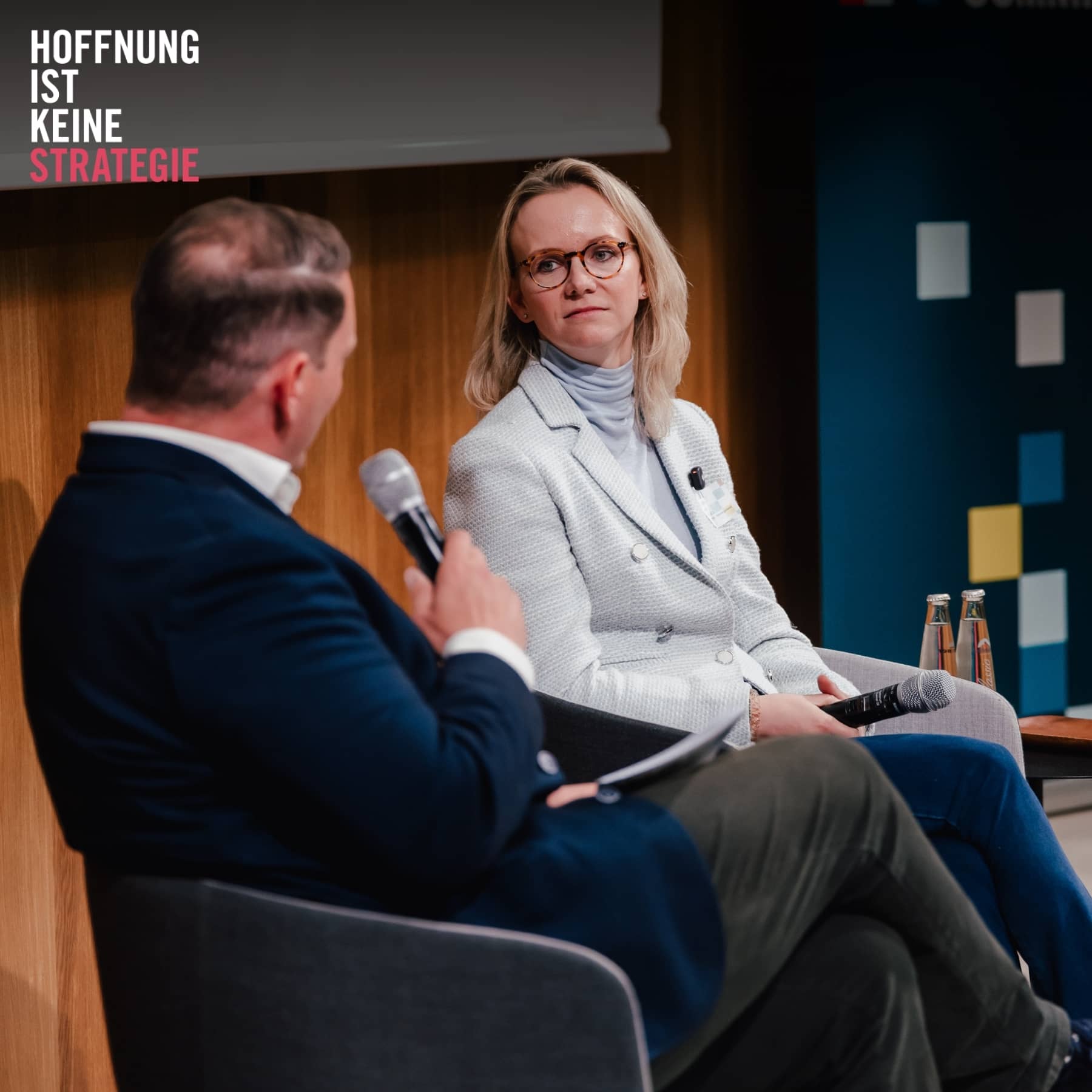
Strategy emerges where people with different perspectives work together on the future of their company. That's exactly what Dr. Lina Sophie von Fricken, head of strategy at Big Dutchman, talks about in this live episode of "Hope Is Not a Strategy." Together with Daniel Theobald, she offers an honest look at a strategy process that proves one thing: successful transformation doesn't start with PowerPoint, it starts with participation.
Strategy needs participation, not directives
Aligning a global family business with more than 3,500 employees, nine portfolio companies and seven regions behind a single strategy sounds like a monumental task. But the decisive success factor wasn't a concept developed by outsiders, it was actively involving the people inside the company. From the very beginning, leaders from different regions and business units were part of the strategy process. That produced not only a shared strategic direction, but above all real commitment. Experience shows that people back change far more strongly when they helped create it.
Resistance is part of the process
Every change creates skepticism at first. Big Dutchman was no exception. Different corporate cultures, independently operating subsidiaries and long-standing habits initially drew critical voices. But that resistance became the turning point. A unified strategy process created a shared language for strategy. Early critics became supporters because the process was transparent and everyone involved could contribute their perspective. Strategy was no longer seen as a directive, but as a shared project for the future.
Transparency builds trust
One key outcome of the process was a new openness within the company. Topics that had rarely been discussed together could finally be addressed transparently. The leadership teams no longer worked solely from the perspective of their own region or function, but jointly developed a vision for the entire company. In family businesses in particular, this kind of transparency is a decisive step toward implementing lasting change.
Data complements experience
Another takeaway from the episode: good strategy isn't based on experience or intuition alone. Both remain important, but they gain considerably in quality when backed by solid data. That's why Big Dutchman is deliberately building market intelligence structures as part of its strategy process. The goal is to systematically analyze growth markets worldwide and make sales decisions on a data-driven basis going forward. This doesn't replace the experience of employees, it adds a well-founded basis for decisions.
Strategy has to come from within the company
Asked whether companies should develop their strategy themselves or outsource it entirely, the answer is clear: responsibility for strategy belongs inside the company. Outside input can be valuable. But strategy only becomes sustainably effective when the people who will later execute it are involved from the start. That's what creates identification, ownership and the willingness to actively shape change.
Who this episode is for
This episode is for managing directors, owners and executives facing strategic change who want to lead their organization successfully through transformation. It makes a compelling case that successful strategy is far more than analysis and planning: above all, it's a process that connects people and enables them to act together. 🚀 Listen now and find out why successful strategy emerges where people take responsibility for the future together.
SHOW NOTES
Dr. Lina Sofie von Fricken https://www.linkedin.com/in/dr-lina-sofie-von-fricken-86139122a/
Daniel Theobald https://www.linkedin.com/in/daniel-theobald-llm/?locale=de
Christian Underwood https://www.linkedin.com/in/christianunderwood/
Strategic Decision Intelligence: https://strategicdecisionintelligence.ai
"Hope Is Not a Strategy" magazine https://shop.strategyframe.ai/products/hoffnung-ist-keine-strategie-ii-1-strategic-decision-intelligence
All links https://linktr.ee/strategyframe