

Your role is changing faster than your strategic process.
You know the feeling: The strategy document has been approved, everyone has nodded in agreement, and three months later, the company is back to making decisions the way it always did. Our masterclass changes that.
2 days on site
MCI Campus, Innsbruck
Max. 20 participants
Every case gets its turn
November 9–10, 2026
Next round
2.950 €
per person, plus sales tax
From strategy processes involving more than 100 companies.
What's being cut from your role, what's staying, and what's being added.
Two years ago, 60 slides of market analysis were your ticket to the executive board meeting. Today, every division head can put together the same analysis on their own in an hour, yet you’re still spending three weeks on it. What will define your role in the future is your judgment, your pace, and the question of who builds the system within which decisions are made.
Deleted: Collecting
Market research, competitive analysis, data preparation. What takes weeks today can be completed in hours once the workflow is in place.
It's up to you: The verdict
Evaluate assumptions, weigh options, get people on board. No AI bears responsibility for a strategic gamble.
Next up: Construction
Strategic work becomes the architecture of workflows. You design the system within which your team will make decisions in the future.
Four Intelligence Layers. Four areas where AI helps or misleads.
Strategy work, when treated as a single, large block, can neither be evaluated nor improved. We break it down into four levels. Each has its own workflows, its own data logic, and its own boundaries. In the end, you’ll know exactly which level your role actually falls under.
01 · Market Intelligence
What's going on out there, and do you find out about it in time?
- From an annual trend scan to continuous monitoring
- Source Quality and Relevance Filters: What You Really Need to Read
- The Limits of Automated Research and How to Recognize Them
02 · Strategic Intelligence
What options do you really have, and what are you betting on?
- First, put all the real options on the table; then decide
- Making Assumptions Explicit: Forecast or Bet?
- Scenarios and alternative positions for stress-testing your own strategy
03 · Organizational Intelligence
What can your organization actually afford?
- From 40 initiatives to 5: the honest question of capacity
- Identifying Capabilities, Bottlenecks, and Resistance
- Track Progress and Identify Overload Early
04 · Decision Intelligence
Will this lead to a decision, and will it hold up?
- The proposal is also well-received by the committee on which you do not serve
- Decision Log: Documenting Decisions in a Traceable Manner
- Where People Remain Indispensable—and Why That Is a Strength
Two days on site.
Six weeks of training.
A certificate.
The process is designed around transfer. What is developed in Innsbruck goes live in your company before the certificate is awarded.
The day starts with you: Where does your strategy function stand on the four levels, and which gap is currently costing you the most? After that, we'll go over market and strategic intelligence.
- Insight: Why Strategies Fall Flat in Implementation—and Why AI Doesn't Change That
- How to Go from Analyst to Decision Architect
- On the CEO's Agenda: How to Land a Position
- You map out your own strategic process across the four levels
- Layers 01 and 02 in Detail, Including the PFISTERER Live Case
- Result: Your prioritized workflow shortlist
7:00 p.m., dinner together. In our experience, this is the part that participants mention most often.
On the second day, you'll be building. Using Organizational and Decision Intelligence, you'll create two workflows based on your own case study, guided by our Strategy Engineers, who build exactly these workflows in client projects.
- Layers 03 and 04 in Detail
- Phases I and II: Two Workflows for Your Actual Strategy Process
- Quality and Governance: Testing Procedures, Error Patterns, EU AI Act
- The Strategy Function of Tomorrow: Roles Between Analyst and Strategy Engineer
- Hot Seat: Christian Underwood and Prof. Dr. Jürgen Weigand Answer the Tough Questions
- Your 90-Day Roadmap
A workflow is going live at your company. You’ll briefly document what worked and what didn’t, and then we’ll review it together.
- You'll get an in-house workflow up and running
- In three to five pages, you’ll document what worked and what didn’t
- Online review session, 90 minutes, with all participants
- Certificate
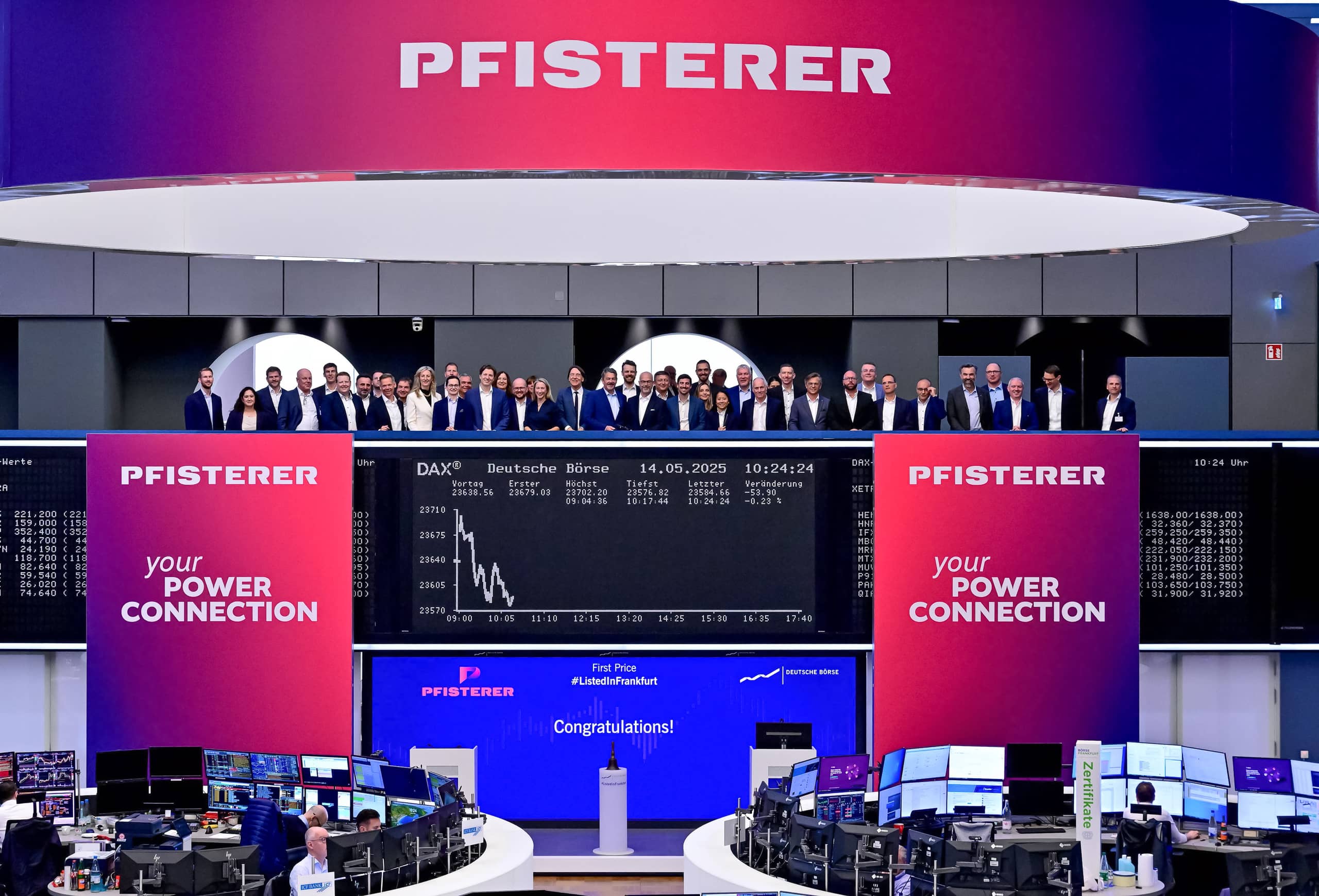
The strategy behind the most successful German initial public offering of 2025 emerged from this process.
The PFISTERER IPO raised €95 million in fresh capital, and the stock price has nearly tripled since then. The strategy was developed by the team led by Head of Strategy Patrick Weng, using StrategyFrame®AI and without a consulting mandate. The case will be presented as a live case on the first day.
"The StrategyFrame® methodology—from market intelligence to strategy activation—has helped us rethink our approach to strategy, make it effective, and ensure our sustainable growth."
Patrick Weng, Head of Strategy at PFISTERER
To the Case StudyWho will be leading the two-day event
Two Perspectives on the Same Question: Fifteen Years of Strategic Practice in Small and Medium-Sized Enterprises and the Academic Cross-Check.
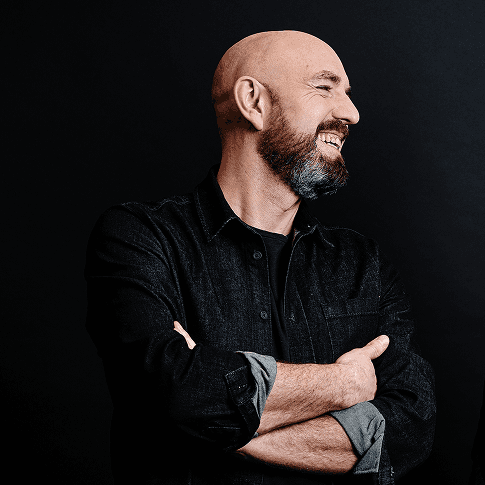
Over 15 years of strategic consulting experience with small and medium-sized businesses. Through hundreds of projects, he has seen firsthand why good strategies often fail in implementation. He developed StrategyFrame®AI to empower companies to act strategically without having to rely on external consultants indefinitely.

Holder of the Chair of Industrial Organization at WHU. He contributes the scientific foundation to StrategyFrame® and translates economic complexity into practical strategic decision-making models.
A certificate that attests to achievement, not attendance.
The official certificate from the Management Center Innsbruck in cooperation with StrategyFrame. Deliberately offered without ECTS credits and without counting toward a degree program: This masterclass is designed for people who aren’t looking to earn academic credits, but rather to take away something they can put into practice on Monday.
The certificate is awarded because two things come together: the name of an internationally accredited university and a transfer project that you demonstrate within your company. The transfer project is therefore the reason why the workflow is actually being built.
Reserve your spot now > Clarify Questions in AdvanceChief Strategy Officers and Heads of Strategy.
People with a strategic mandate who don’t want to set up the next cycle the same way they did the last one. Prerequisite: You must bring a real-world strategy process to the table. No prior AI knowledge is required. Not suitable for consultants or vendors—this helps maintain an open atmosphere in the group. For them, there’s the Certified Partner Program.
Chief Strategy Officer
You are responsible for the company's strategic process and are currently in the process of fundamentally rethinking it.
Head of Strategy
You're getting results with a small team and looking for ways to make an impact without putting in extra hours.
Head of Corporate Development
Business Development, M&A, Strategic Portfolio. Decisions with long-term implications.
Strategy Executives in Small and Medium-Sized Enterprises
In family-owned businesses and "hidden champions," where the role must be clearly established.
One price. Everything you need is included .
CSO of the Future of AI
Masterclass at MCI Innsbruck, including a transfer phase and a certificate.
- Two days of in-person classes at the MCI Campus in Innsbruck
- A portable workflow toolkit so you don't have to start from scratch at home
- Three months of access to StrategyFrame®AI, so you can test the workflows on your actual data rather than on sample data
- Meals and a group dinner on the first day
- Transfer Support: If your internal workflow gets stuck, we'll take a look at it together before it gathers dust
- Official Certificate from the MCI and StrategyFrame®
10% discount for groups of three or more participants from the same company. Room availability at the partner hotel upon request.
Reserve your spot now > Clarify Questions in AdvanceWhat CSOs want to know in advance .
Because the tool isn't the bottleneck. A language model answers the question you ask. The real work lies in sequencing the right questions, making assumptions explicit, and documenting results in a way that a committee can follow. It is precisely this sequence that you're building here, using your own case as an example, based on a framework of over 100 strategy processes.
Then the transfer phase begins. Six weeks later, a workflow will have been implemented in your company; you’ll document what worked in a three- to five-page report, and we’ll review it together in an online session. Only then will you receive the certificate.
All right, then bring it along. These two days will use your actual process as a starting point and break it down on four levels. By the end, you'll know which gap is costing you the most right now, and you'll have two workflows to close it.