

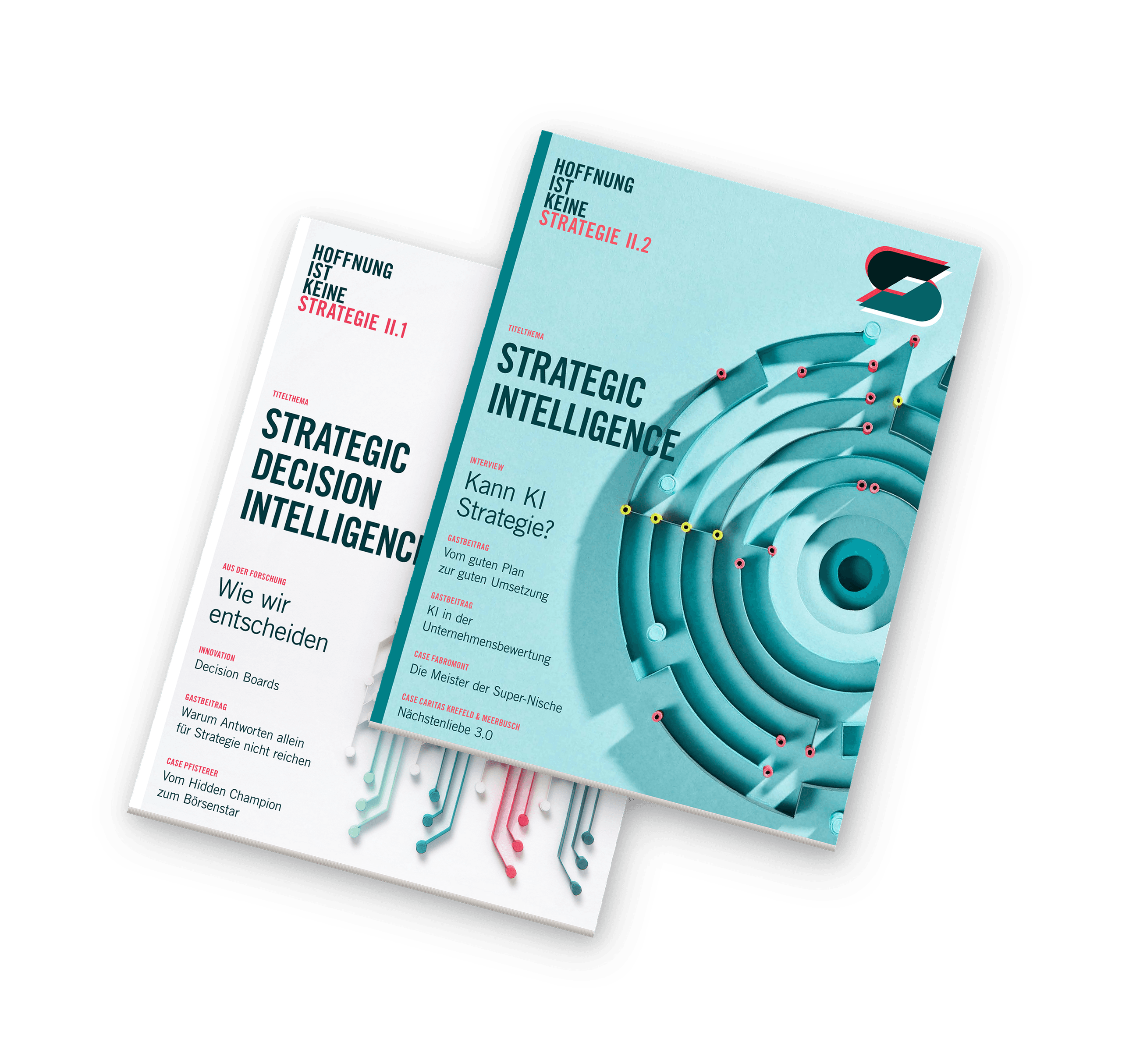
 Digital magazine series
Even with AI, hope is not a strategy.
Part 1 and Part 2 of Hope Is Not a Strategy II - more than 100 pages from real strategy processes, not from a textbook.
- The independent study: Prof. Dr. Julia Hautz (University of Innsbruck), 15 interviews at seven companies working with StrategyFrame®AI: what AI really delivers in strategy work
- The architecture behind it: four levels of strategic intelligence and 18,500 fully specified tasks, the structure without which AI stays an expensive analysis tool
- Four real cases: PFISTERER (IPO of the Year 2025), Fabromont, Caritas Krefeld & Meerbusch, StrategySummit insights. No anonymized case studies.
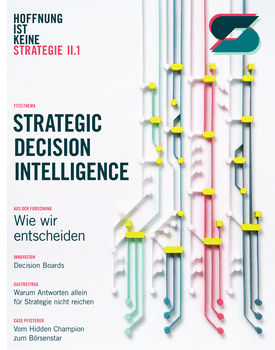
Part 1: Strategic Decision Intelligence
Why strategic decision-making capability needs a new architecture.
- The four levels of strategic intelligence, and why AI stays an expensive analysis tool without them
- How organizations process decisions until they no longer hurt anyone ("decision dilution")
- How decision boards turn data into decisions, by Fabian Wennemer (ex-BMW, CPO StrategyFrame®AI)
- Case PFISTERER: from hidden champion to IPO of the Year 2025, share price from €29.65 to €82.80
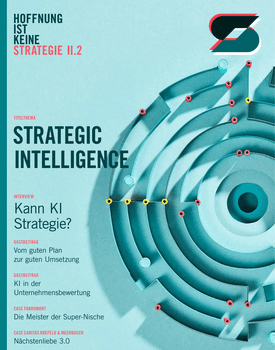
Part 2: Strategic Intelligence
How AI is changing strategy work, from the first plan through to daily execution.
- The independent study: Prof. Dr. Julia Hautz (University of Innsbruck) conducted 15 interviews at seven companies working with StrategyFrame®AI.
- What's behind the agent system: 18,500 fully specified tasks before the first AI went to work
- Execution as an operating system: launch, implement, execute, adjust
- Cases: Fabromont (Swiss textile flooring champion) and Caritas Krefeld & Meerbusch (strategy for nonprofits)