

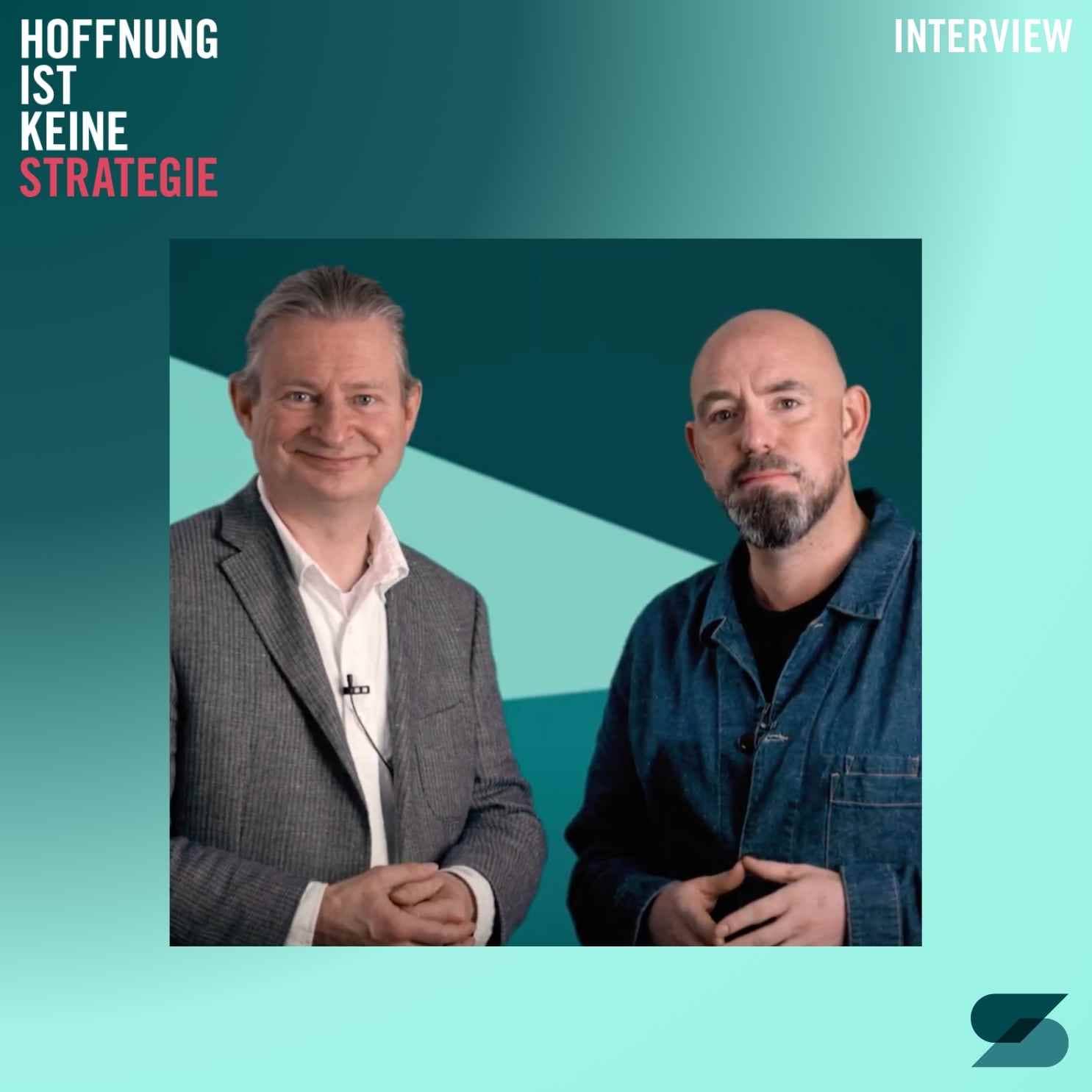
#75 The four steps of strategy development
This episode was recorded in German.
Insights from the new podcast episode with Christian Underwood and Oliver Kern
In the latest episode of our Strategy Podcast "Hope Is Not a Strategy," host Christian Underwood welcomes his fellow managing director Oliver Kern, who leads Product & Learning at StrategyFrame. Together they dive deep into strategy development and explain why it's a continuous learning process, and how you can effectively build your strategy skills.
Why strategy development?
A well-thought-out strategy is the backbone of every successful company. It helps you define goals clearly, use resources efficiently and focus on what matters. Without a solid strategy, you can easily lose focus, which leads to inefficient strategy processes and missed opportunities. Strategy development allows you to adapt to market changes and stay competitive over the long term.
Why is strategy development a learning process?
The ability to develop strategy is critical to succeeding in a dynamic market. Strategies aren't developed on a regular basis, which means many people go through the process for the first time. This is where upskilling and reskilling come in: two core topics you have to learn when leading a team and running a strategy process. Oliver Kern emphasizes that it's important not only to understand the theory, but to master the entire process in practice.
This article gives you a clear, structured approach to strategy development in four simple steps that guide you through the entire process.
The 4 steps of strategy development
The full strategy workflow consists of eight steps, four of which belong directly to strategy development:
Plan Analyze Focus (strategy workshop 1) Adapt along the target picture (strategy workshop 2)
Step: Plan
Planning is the first and possibly most important step in strategy development. This is where you lay the foundation the entire strategy builds on. That includes setting clear goals, identifying the key stakeholders and defining the resources you need. Good planning creates the transparency you need and lets you spot and address potential challenges early. Strategy tools like the StrategyFrame Room help you discuss and clarify these fundamental questions as a team. It's important that everyone involved shares an understanding of where the journey is headed and which goals are to be achieved.
Step: Analysis
The analysis phase is about examining your company's current situation and external market conditions in detail. A thorough situation analysis is essential for identifying strengths, weaknesses, opportunities and risks. Customer analysis also plays a decisive role. Oliver Kern emphasizes how important it is to understand customer needs and expectations and build them into the strategy. Tools like the StrategyFrame software help you collect and analyze data efficiently so you can make well-founded decisions.
Step: Focus
The third step is focusing. This is about setting priorities and concentrating on the most important goals and actions. It requires clearly delimiting and prioritizing your strategic initiatives. According to Oliver Kern, focus matters especially because it keeps you from losing time and energy on side issues. He explains that the focusing process starts with the question: "Where is the right place for us to concentrate?" That calls for an honest assessment and clear boundaries. The focus goes to the areas with the greatest potential for growth and success. Another central topic is defining specific goals and metrics that make progress measurable. It helps to concentrate on a few high-impact initiatives. This step also includes developing a clear, actionable plan that defines all necessary measures and milestones. Workflow Learning can support this focus and make sure your team stays aligned on the most important tasks and executes them effectively.
Step: Adapt
The final step of strategy development is adapting. A strategy has to be flexible and adaptable so it can respond to changes in the market and in the company. Oliver Kern points out that adaptation requires continuous review and adjustment to make sure the strategy stays relevant. That means regularly gathering feedback and measuring progress, then making adjustments based on what you learn. Our StrategyFrame software and the StrategyFrame Room offer valuable support here by creating space for regular strategy reviews and feedback rounds and documenting adjustments efficiently.
According to Oliver Kern, this is an iterative process in which flexibility and responsiveness are decisive factors for long-term success. Workflow Learning helps put the necessary adjustments into practice quickly and makes sure the whole team is up to date. Finally, the Academy supports the continuous expansion of your team's knowledge and skills, which improves how adaptable your strategy is.
Involving your team and stakeholders in strategy development How do I involve my team and stakeholders in strategy development, and how do I guide them efficiently through the strategy process? Oli Kern recommends actively involving your team and the relevant stakeholders in strategy development from the start. Open, transparent communication is decisive for running an effective strategy process. That works through regular workshops and meetings where everyone involved can contribute their perspectives and ideas. Supporting tools like the StrategyFrame Room and Workflow Learning make visualization and collaboration easier, while the Academy provides continuous development. Active involvement and a sense of shared responsibility significantly increase buy-in and commitment to the strategy you develop.
Conclusion:
Strategy development is an essential process for every company, and it has to be approached systematically. Oli Kern emphasizes the importance of thorough planning, detailed analysis, clear focus and continuous adaptation in building a successful strategy. Involving your team and stakeholders plays a central role, because it builds buy-in and commitment to the strategy. Supporting tools like the StrategyFrame Room, Academy, StrategyFrame software and Workflow Learning can make the process considerably easier and better. By taking these steps and recommendations to heart, you lay the foundation for lasting success in your company.
If you need support with strategy development or have questions about how to improve the process in your company, feel free to schedule a no-obligation consultation with us.
SHOW NOTES
Podcast "Hope Is Not a Strategy"
Book "Hope Is Not a Strategy"