

How a strong product becomes a company built to last
This episode was recorded in German.
Strategy with clarity: how Fabromont AG is realigning its business model
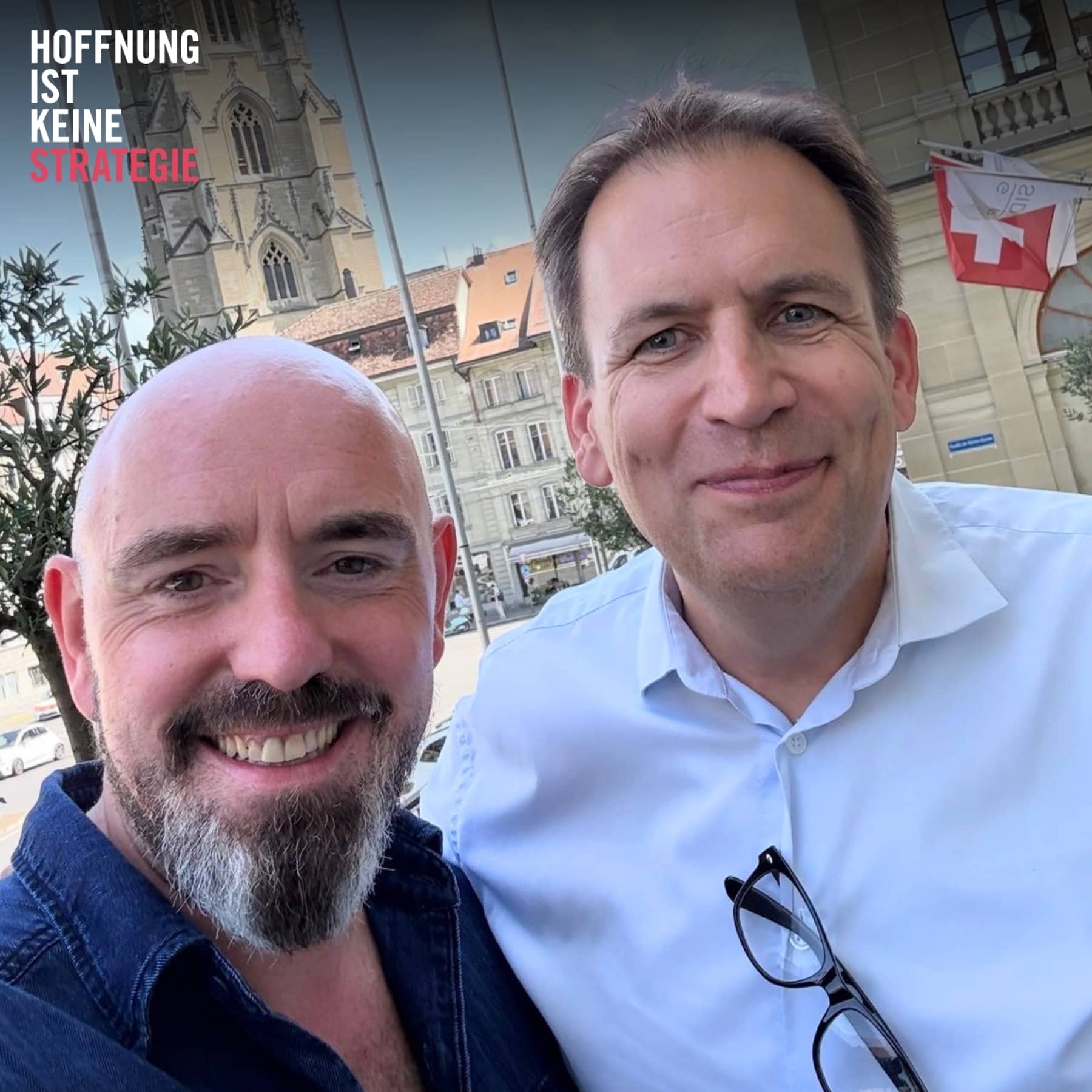
A unique product alone is not a strategy. That is exactly what Marco Dalla Bona, Managing Director of Fabromont AG, discusses with Christian Underwood in the latest episode of "Hope Is Not a Strategy." Fabromont AG is considered a hidden champion from Switzerland: with its Kugelgarn yarn, the company created a category of flooring that is unique worldwide, holds more than 200 patents, and has delivered projects such as the European Central Bank. Yet despite this strong position, the company faced one central question: how do you turn an exceptional product into a company that is strategically well positioned and fit for the future?
Why strong products alone are not enough
Many mid-sized companies think product first. So did Fabromont in the past. And that is exactly where the risk lies: companies fall in love with their technology and lose sight of what customers actually need. In the podcast, Marco Dalla Bona describes a decisive shift in perspective: away from purely product-driven thinking, toward a clear focus on specific applications and market segments. The first step was building a comprehensive market intelligence structure. The goal was transparency about markets, potential, and customer requirements. The result: ten clearly defined application segments that the company now consistently aligns its strategy around. Strategy becomes concrete and manageable instead of abstract. Instead of general growth targets, you get data-based decisions with clear priorities.
Data creates clarity, and focus
A key takeaway from the episode: strategic clarity comes from facts. Today, Fabromont AG analyzes markets down to the sales territory level and combines external market data with internal sales metrics. That makes it visible where the real market potential lies and which segments matter strategically. What is especially compelling is how consistently the data translates into operational management. Sales teams get concrete targets, market shares become measurable, and growth targets can be planned realistically. Strategy no longer ends in workshops or PowerPoint slides, it is translated directly into day-to-day work. For Marco Dalla Bona, that is one of the biggest benefits of professional strategy work: clarity for the entire organization.
Strategy also means saying no
A particularly important point in the episode: good strategy defines not only what a company wants to do, but also what it deliberately gives up. Companies with strong products in particular tend to chase as many market opportunities as possible at the same time. But lasting differentiation only comes from focus. That is why Fabromont AG positions itself precisely where the product's advantages really matter: durable, heavy-use applications with clear economic benefits across the entire life cycle. Anyone looking for short-term or purely fashionable solutions is deliberately not part of the target group. This clarity not only simplifies sales and positioning, it also strengthens internal decision-making.
From product supplier to systems provider
Alongside its strategic focus, Fabromont AG is working on the next stage of development: expanding from a pure product manufacturer into a systems provider. That includes new installation systems, digital customer solutions, and additional services around flooring. At the same time, the company is investing more heavily in research and development again to build on the founder's spirit of innovation. Especially notable: despite high production costs, Fabromont deliberately keeps production in Switzerland. That is possible thanks to a high degree of automation, technological differentiation, and clear positioning in the premium segment. Instead of competing on price, the company relies on uniqueness, quality, and long-term customer value.
Strategy only becomes real in execution
Another central theme of the episode is strategy execution. The real difference is not made in the workshop, it is made in daily operations. That is why Fabromont AG now relies on clear accountability, professional project management, and a binding PMO. Initiatives are tracked consistently, milestones are reviewed, and progress is made transparent. According to Marco Dalla Bona, this step is often underestimated: as soon as strategy becomes operationally measurable, the company culture changes too. Ownership, focus, and commitment increase, and so does the likelihood of actually reaching strategic goals.
Who this episode is for
This episode is especially relevant for entrepreneurs, managing directors, and strategy leaders in mid-sized companies who want to position their business more clearly and develop it strategically. It shows convincingly that even successful hidden champions have to keep questioning their strategy, and that clarity is often the decisive competitive advantage. Listen in and find out why successful strategy does not start with products, but with clarity.
SHOW NOTES
Marco Dalla Bona https://www.linkedin.com/in/marco-dalla-bona-22817515/
Christian Underwood https://www.linkedin.com/in/christianunderwood/
Strategic Decision Intelligence: https://strategicdecisionintelligence.ai
Magazine "Hope Is Not a Strategy" https://shop.strategyframe.ai/products/hoffnung-ist-keine-strategie-ii-1-strategic-decision-intelligence
All links https://linktr.ee/strategyframe