

What bad decisions really cost your company
This episode was recorded in German.
The price of bad decisions: why they cost companies more than you think
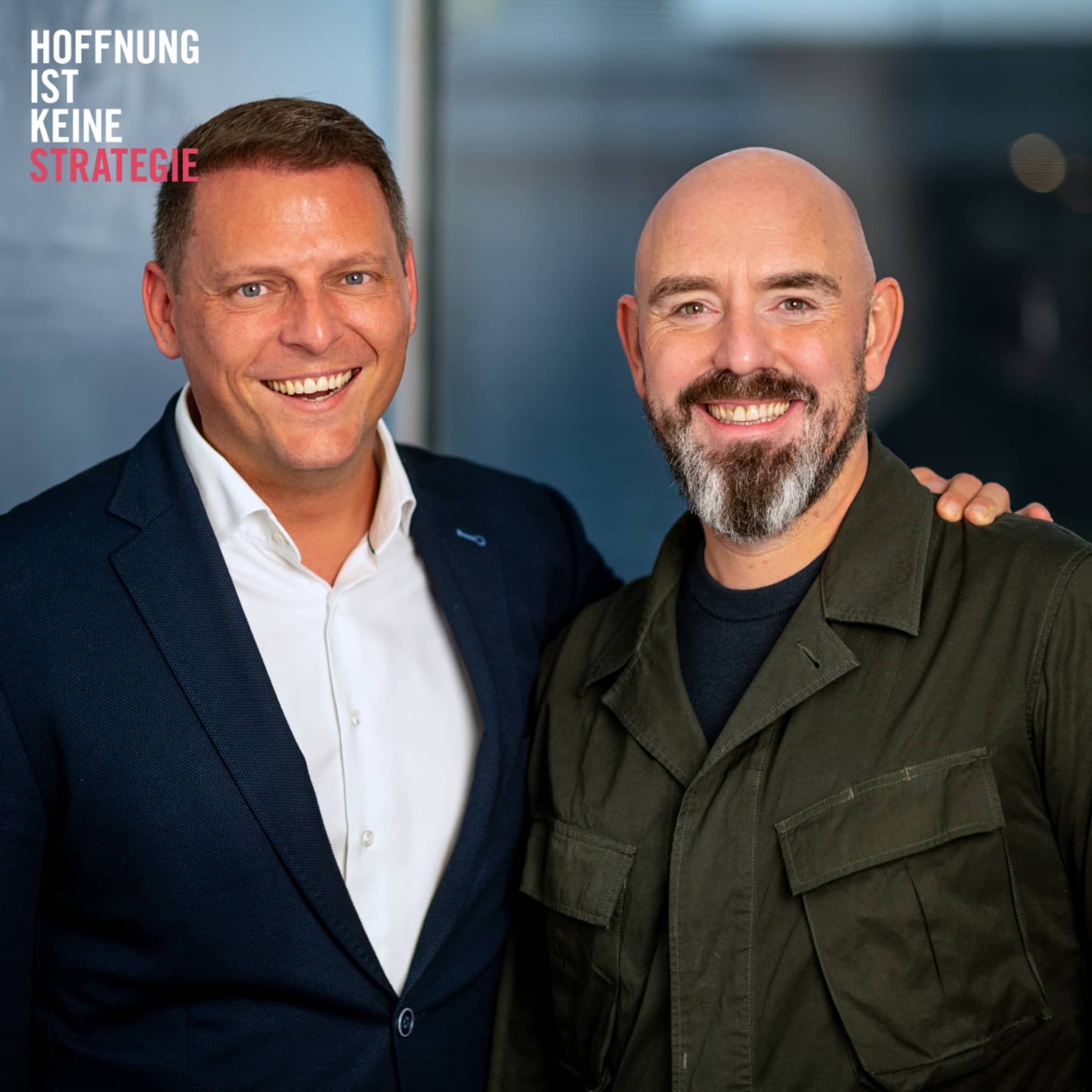
In the latest episode of “Hope Is Not a Strategy,” Christian Underwood and CFO Daniel Theobald discuss a question many companies underestimate: what does a bad decision really cost?
Bad decisions travel further than you think
When people think about bad decisions, they think about financial losses first. But the real impact goes far beyond that. Bad decisions tie up capital, destroy trust with banks and partners, and severely limit a company's room to maneuver. What often follows is a dynamic that's hard to stop, and in the worst case, it threatens the company's survival.
When logical decisions become a risk
What makes this especially tricky: many problematic decisions look perfectly sound at the moment they're made. Companies expand their business model, invest in new markets, or build further on existing strengths. That very logic is what makes them dangerous. Because when assumptions aren't tested properly or critical perspectives are missing, a good idea can quickly turn into a structural risk.
The mistake is rarely the idea
The examples in the episode make it clear: the problem isn't the idea, it's how the decision gets executed. Money is invested without validating the underlying data. Products are developed without real customer insight. Dependencies are built without being questioned. These patterns creep in gradually, and their effects often show up much later.
Why bad decisions are systemic
Bad decisions are rarely the result of ignorance. They emerge in systems where too little gets questioned and where conviction carries more weight than critical reflection. In successful organizations especially, the risk grows that decisions are no longer challenged enough and warning signs are spotted too late or ignored altogether.
How better decisions happen
At the same time, it's clear that good decisions are no accident. They rest on solid data, genuine customer focus, and the deliberate inclusion of different perspectives. Just as critical is the ability to question decisions early and correct course before they become irreversible.
Decisions as a strategic success factor
In the end, the episode points to one central truth: companies don't fail for lack of ideas, they fail on the quality of their decisions. Understanding that lever and improving it systematically creates the foundation for lasting success, especially in a world shaped by uncertainty and complexity.
SHOW NOTES
Christian Underwood https://www.linkedin.com/in/christianunderwood/
Daniel Theobald https://www.linkedin.com/in/daniel-theobald-llm/
All links https://linktr.ee/strategyframe