

Why 99% of companies use AI completely wrong
This episode was recorded in German.
Transformation with substance: why strategy, organization and AI need to be rethought now
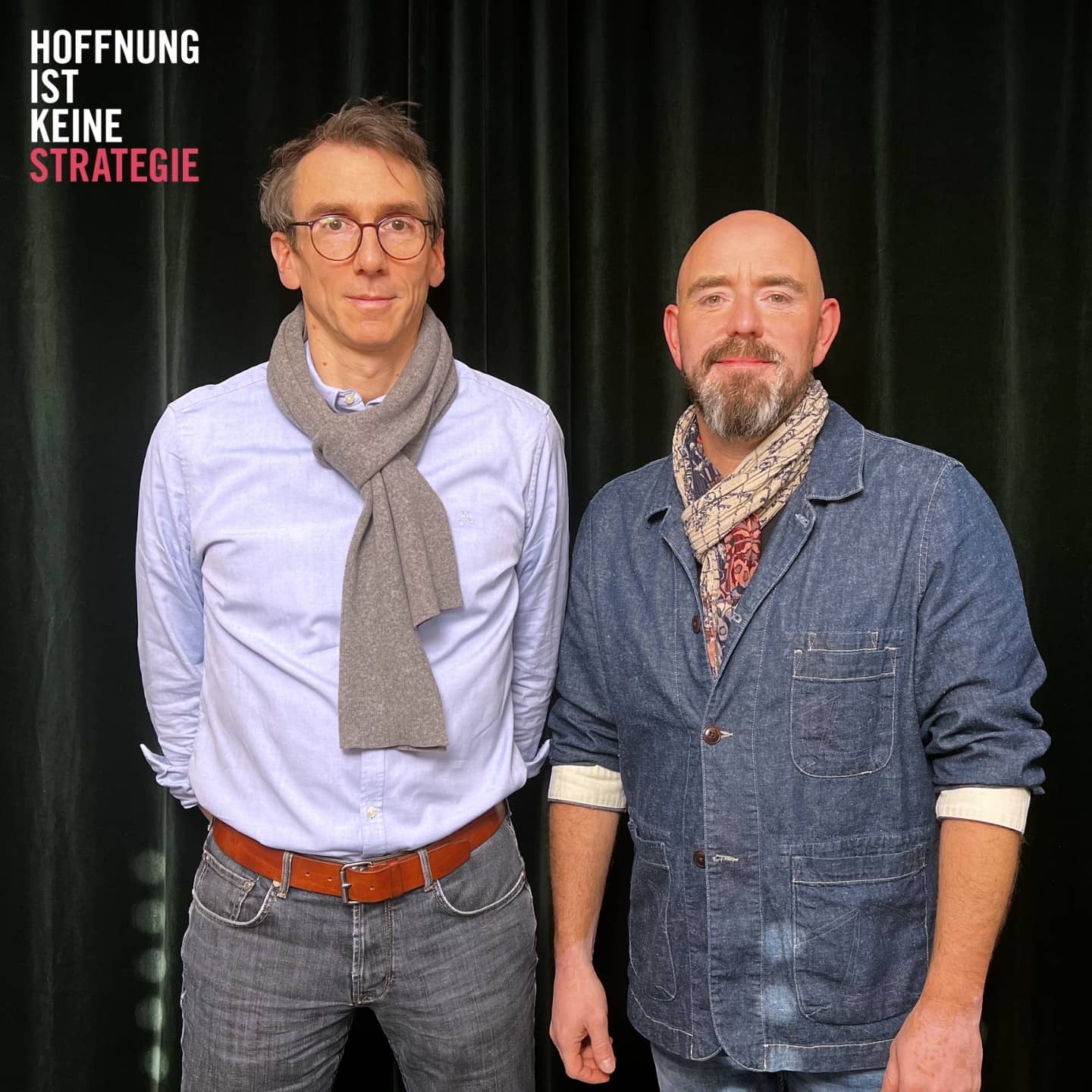
Companies today face a tangle of challenges that conventional approaches often can no longer handle. In the new episode of the podcast "Hope Is Not a Strategy," Christian Underwood talks with Martin Orthen, who has spent many years guiding companies through large IT and transformation programs. His verdict is clear: the way transformation is conceived and carried out is no longer up to date in many organizations.
Cutting costs without a target picture? A strategic mistake
Many companies are currently in savings mode. Budgets are shrinking, headcount reduction has become the standard instrument. But one decisive point often gets overlooked: cost reduction is not an end in itself, it needs a strategic target picture. When companies cut positions first and only then think about organization, roles and processes, a structural vacuum opens up. Points of contact disappear, knowledge is lost, processes turn dysfunctional. That is exactly where transformation risks begin, risks that are expensive to fix later.
Or, as Martin puts it: "We think about cost reduction too narrowly. Instead of asking how many euros can I save, we should be asking what my organization needs to look like at the end of the process."
The underestimated role of people in transformation projects
Whether it's an SAP rollout, a security program or a process overhaul: for many teams, complexity is the real problem. And the more complex the project, the higher the demands on communication, enablement and trust. Martin Orthen stresses that digital transformation always remains a people business. Technical know-how is interchangeable; dealing with people, fears and resistance is not. Especially when costs are under pressure, uncertainty grows inside organizations. Employees wonder whether AI or new tools put their jobs at risk. Taking those fears seriously and addressing them head-on is a key success factor.
AI in mid-sized companies: big expectations, small steps
While everyone on LinkedIn already seems to be an AI champion, experience paints a different picture: many companies use AI only on a small scale, for texts, emails, minor tasks. What's missing is a structural approach focused on value creation. Processes that currently take weeks or months, product development for instance, could be accelerated dramatically with generative AI. Yet the willingness to tap into that potential systematically is often low.
There are two reasons for this: capabilities are missing, since organizations need to learn how AI really works. And mindset is missing, because without strategic openness at the top, companies don't move out of their comfort zone.
Navar: AI for the first critical steps of a transformation
In the conversation, Martin Orthen also introduces Navar, the solution developed by his team. The idea: many transformation projects waste enormous amounts of time in the early phase defining problems, assessing risks and bringing structure to unclear tasks. Navar takes over those first steps, AI-based. Through a structured system of questions and sparring, you get a well-founded assessment within a very short time of which problems exist, which risks are present and which steps are needed. That doesn't just save days or weeks, it puts consultants and companies on equal footing and reduces knowledge monopolies at the same time. In the long run, Navar is meant to make informal knowledge paths within organizations visible, spot risks in handovers and support the entire program logic of transformation projects.
Collaboration becomes more personal, not more technical
Equally interesting is Martin Orthen's read on how the relationship between companies and consultants is changing. AI will take over parts of classic consulting work: research, analysis, structuring. But trust, relationships and joint reflection stay human. And internally? Here too, collaboration becomes more intense, not more superficial. Employees are better enabled to contribute, spot risks and help shape outcomes. AI doesn't replace people, it demands that people take on more responsibility.
What leaders need to do now
For Martin Orthen, successful transformation starts not with tools but with mindset. Companies have to talk openly about AI and take their employees' fears seriously. At the same time, it's about enabling people rather than simply handing them licenses. Before efficiency programs are launched, you need strategic clarity: a target picture that provides direction. Beyond that, organization and capabilities should be understood as the central levers that decide whether change succeeds. And not least, responsible leadership means investing deliberately precisely when costs are under pressure, instead of cutting on reflex and giving away long-term opportunities.
Want to learn more about our advertising partners?
You'll find all the details here: https://i-pointing.com/de/
SHOW NOTES
Martin Orthen https://www.linkedin.com/in/morthen/
Navar AI https://www.navar.ai/
Christian Underwood https://www.linkedin.com/in/christianunderwood/
StrategySummit 2026 https://www.strategyframe.ai/strategysummit2026
All links https://linktr.ee/strategyframe