
Trustworthy AI in sales: what ChatGPT and friends can't do
This episode was recorded in German.
How AI finally makes it from research into mid-sized companies
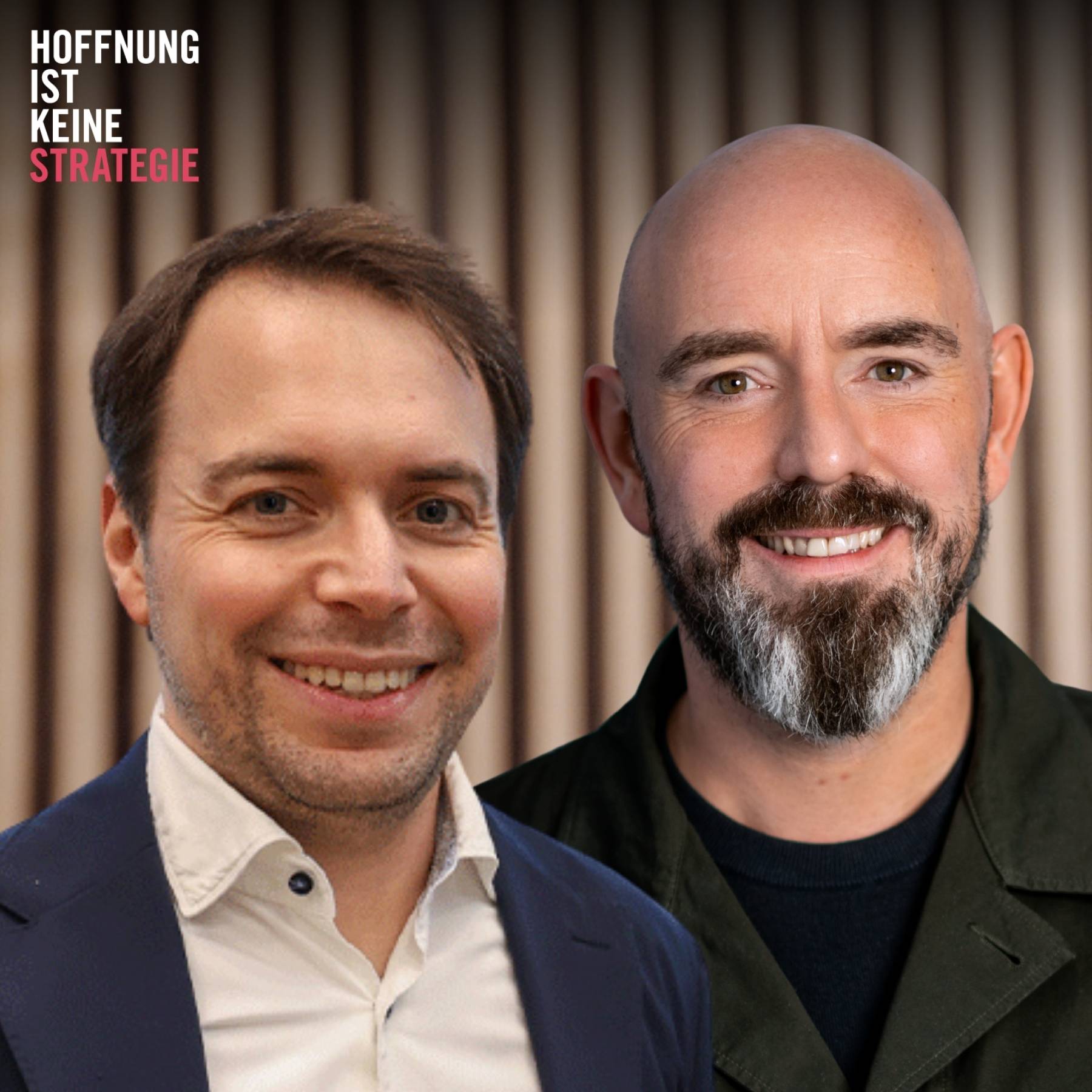
Germany is among the world leaders in AI research. Yet when people think about artificial intelligence, almost everyone pictures Silicon Valley, not Saarbrücken. Prof. Dr. Benedikt Schnellbächer, professor of digital transformation and entrepreneurship at Saarland University and founder of the AI startup ZopaAI, knows both worlds. In conversation with Christian Underwood, he shows how companies can close the gap between research and practice.
Saarland as a laboratory of change
Coal, steel, automotive: Saarland has been through structural change more than once. The Ensdorf mine is closed, Ford has shut down production in Saarlouis, and now the next big wave is arriving with AI. Benedikt Schnellbächer sees no reason for pessimism. "Just because something is under pressure right now doesn't mean it has no future," he says. The task is twofold: renew what exists and create something new at the same time. It helps that Saarland bet on computer science and AI early on, with institutions like the German Research Center for Artificial Intelligence (DFKI) and two Max Planck Institutes.
Why the transfer is so hard
Benedikt Schnellbächer names two reasons. The first is incentives: companies think in quarters and customers, research thinks in years and publications. The second is the missing translation work. Many hidden champions have no research and development department of their own. "The technologies sit in the institutes, but the institutes simply don't know what the need is," he says, describing the dilemma. In the end, a managing director is left wondering who to call at the university.
Three ways to tap into research
Getting started can be very low-barrier. The first way: call the university's startup or entrepreneurship center and post a thesis topic that is as concrete as possible. The second way: joint research projects funded by the federal government, the state or the EU. The company is then free to use the results, because that is exactly what the funding programs are designed for. The third way: the research tax allowance, which many still have not heard of. Christian Underwood adds from his own experience that the application is nearly impossible to manage without outside support.
Startups as a shortcut
If you don't want to make AI your core business, you can work with startups. Many are spin-offs from research institutes, have already built something and understand the need. A typical pilot runs three months and delivers a concrete result for one product group, one machine or one line. After that, you can scale it up, or end it. The decisive advantage of startups is their speed. "That's the only thing they have: speed," says Benedikt Schnellbächer. The new Startup Factories can help here, for example SouthwestX in Saarbrücken, which deliberately brings companies together with the right startups.
Tailored and transparent instead of a black box
With ZopaAI, Benedikt Schnellbächer puts his research focus into practice: connecting internal company data with external market data. Instead of ever larger models, the startup relies on an AI trained for a single company that leverages its niche strengths. It shows, for example, which markets or industries a particular welding process could still be used in. Every recommendation is meant to be traceable: several specialized AI agents work together and disclose which sources they used. "The point is simple: tailoring, trustworthiness, and then getting moving fast." For reasons of data sovereignty, ZopaAI avoids models from American providers and develops its own. One insight surprised him along the way: how much effort planning and forecasting consume in companies, and how much AI with external data relieves exactly that burden.
An invitation to act
This episode is for strategy leaders and managing directors in mid-sized companies who want to move AI beyond first experiments and into their value creation. Benedikt Schnellbächer's advice is refreshingly concrete: call a startup center or a Startup Factory tomorrow, and do it with the topic that is already on your table for next year. Support pays off most where the energy is already there.
🚀 Listen to the podcast episode now and bring AI from research into your company!
SHOW NOTES
Prof. Dr. Benedikt Schnellbächer https://www.linkedin.com/in/benedikt-schnellb%C3%A4cher-622890230/
Christian Underwood https://www.linkedin.com/in/christianunderwood/
Strategic Decision Intelligence: https://strategicdecisionintelligence.ai
"Hope Is Not a Strategy" magazine https://shop.strategyframe.ai/products/hoffnung-ist-keine-strategie-ii-1-strategic-decision-intelligence
All links https://linktr.ee/strategyframe