

Lead strong, stay real: what really counts in day-to-day leadership
This episode was recorded in German.
Lead strong, stay real: why reliability is the foundation of good leadership
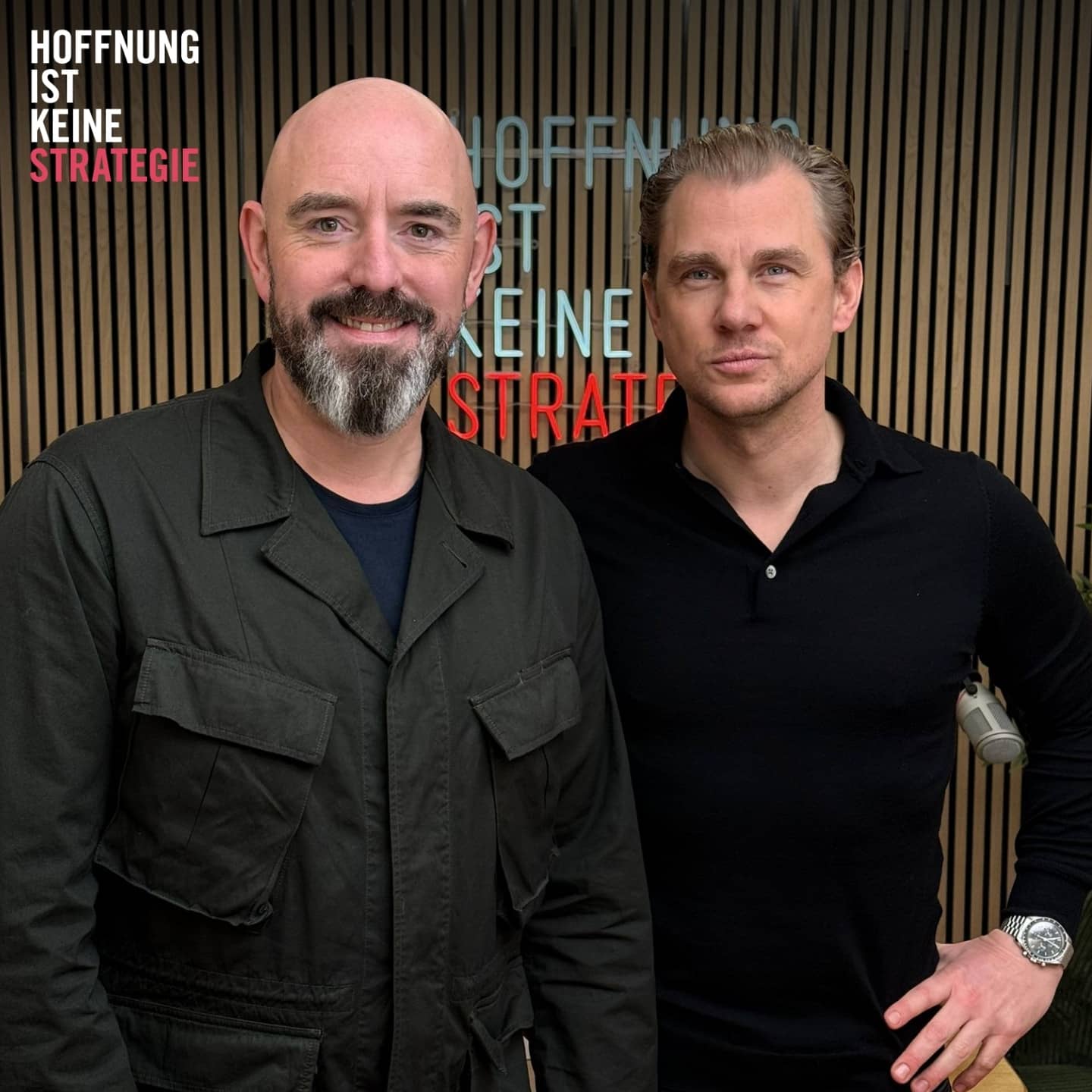
Leaders today are under enormous pressure. Speed, complexity, hybrid work models and rising expectations from employees hit people who often grow into leadership roles without any real preparation. In the latest episode of "Hope Is Not a Strategy," Christian Underwood talks with coach and author Sascha Dehn about what actually makes leadership effective under these conditions, and why many problems have less to do with methods than with mindset. The conversation is prompted by Sascha Dehn's new book "30 Erfolgsprinzipien für junge Führungskräfte – Ihr Weg zu wirksamer und authentischer Führung," in which he brings together the key lessons from his own leadership experience and his work as a coach.
Leadership starts with self-reflection
A central theme of the episode is self-reflection. Sascha Dehn speaks openly about his first leadership role and the mistakes he made back then: too little clarity, too little communication, too much trust without leadership. Looking back, it's exactly those experiences that shape him today and that motivated him to write his book. Leadership, Dehn says, always starts with the ability to question your own behavior: How do I actually come across? What do I expect, and how much of that do I really communicate? Without deliberate self-reflection, blind spots emerge. Leaders overestimate themselves, underestimate the people around them or lose touch with the effect of their actions. The result is misunderstandings, lost trust and frustration in the team.
Reliability as an invisible leadership promise
The conversation makes it especially clear why reliability is one of the most important leadership principles for Sascha Dehn. Reliability doesn't mean control or rigidity, it means predictability in the best sense. Employees need to know where they stand. Decisions can't change daily, expectations have to be clear and commitments have to be kept, even on seemingly small things. Using examples from companies and from competitive sports, Dehn shows that leadership doesn't have to be loud or spectacular to have an impact. Often it's precisely the calm, steady personalities who build trust and guide teams stably through challenging phases. Leadership becomes effective when it creates security, not through perfection, but through consistency.
Communication creates clarity, or chaos
Another key topic of the episode is communication. Many leaders, as Sascha Dehn observes, avoid stating expectations clearly because they shy away from conflict or want to be liked. But the opposite happens: unclear communication creates uncertainty, frustration and ultimately worse results.
Good leadership means making expectations transparent, listening and creating space for dialogue. When stepping into a new leadership role in particular, it's crucial to understand first and shape second. Anyone who tries to change things too quickly without listening often loses the team before the real work even begins.
Leadership needs mindset, not heroes
A recurring idea in the episode is moving away from the leader as hero. Leaders don't have to do everything themselves, know everything better or be available around the clock. Quite the opposite: pulling every task toward yourself and trying to control everything strips the team of responsibility and motivation. Leadership means creating the conditions in which others can do good work. Sascha Dehn describes leadership as a marathon, not a sprint. Consistency, routines and a conscious approach to your own energy are decisive for staying effective over the long run. His guiding principle, "lead strong, stay real," captures this mindset perfectly.
Who this episode is especially relevant for
This episode is for young leaders looking for direction, as well as for experienced leaders who want to reflect on their own behavior. It's an honest, practical impulse for anyone who sees leadership not as a status but as a responsibility. If you want to lead with more clarity rather than more volume, this conversation offers plenty to think about, along with the insight that good leadership is rarely spectacular but always reliable.
🎧Listen now and find out why effective leadership starts with your own mindset.
SHOW NOTES
Sascha Dehn https://www.linkedin.com/in/sascha-dehn-29075182/
Book "30 Erfolgsprinzipien für junge Führungskräfte" https://www.thalia.de/shop/home/artikeldetails/A1076696258
Christian Underwood https://www.linkedin.com/in/christianunderwood/
Episode 96 with Sascha Dehn https://youtu.be/avsDJ-WiCH0
StrategySummit 2026 https://www.strategyframe.ai/strategysummit2026
All links https://linktr.ee/strategyframe