

No strategy, no credit: why banks decide differently today
This episode was recorded in German.
Strategy instead of gut feeling: why financing is becoming a question about the future
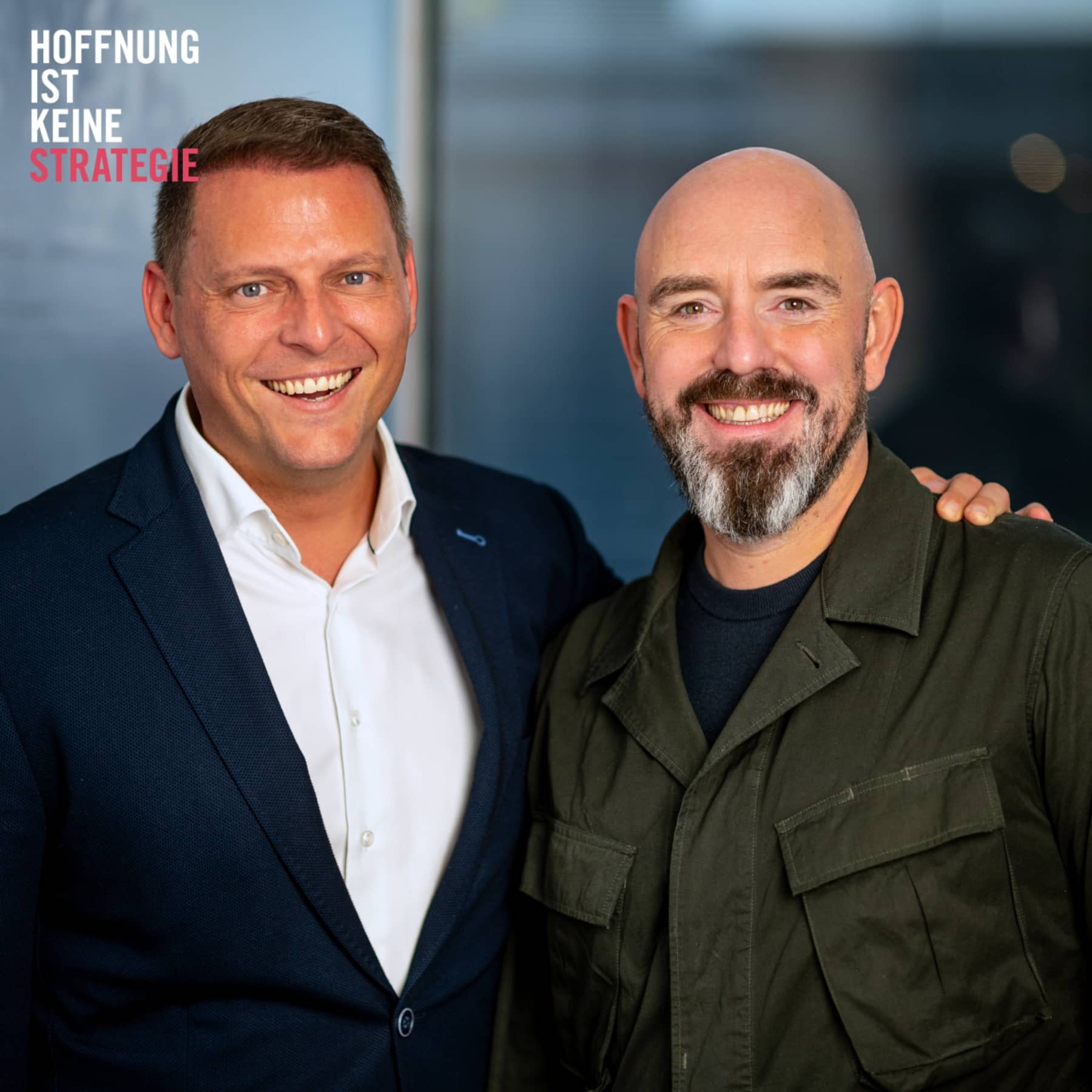
In volatile times, one key playing field for companies is changing fundamentally: financing. What used to be largely an extrapolation of the past is increasingly an assessment of the future. That's exactly what Christian Underwood and Daniel Theobald discuss in this episode of "Hope Is Not a Strategy," and they make it clear why many companies are currently hitting their limits here. For a long time, financing was a routine process. Historical figures, supplemented by forecasts, were enough to make lending decisions. But that logic works less and less. Markets change faster, uncertainty grows and business models are under constant pressure to transform. For banks, this means they have to judge more than ever whether a company will still be viable in the future. That shifts the focus. It's no longer just history that counts, but the ability to deliver a clear and coherent perspective. And that's exactly where many companies run into trouble. The numbers are usually well prepared, but the connecting element is often missing: a clear strategy.
Assessing the future means assessing uncertainty
From a bank's point of view, every financing decision today is to some extent a bet on the future. The challenge is to make that bet on the soundest possible basis. And that becomes difficult when key questions remain unanswered: Where is the company heading? What assumptions is it based on? And what exactly is the focus?
In practice, strategy is often treated only superficially in financing processes. It gets asked about, checked off, but rarely truly understood. The result is a decision-making process driven more by gut feeling than many would like. For companies, that has direct consequences: decisions take longer, terms become less predictable and risk goes up.
Clarity as the decisive lever
The central insight from the conversation is as simple as it is powerful: clarity reduces risk. When companies articulate their strategic assumptions cleanly, define their focus clearly and translate that logic into their planning, a completely different picture emerges.
Suddenly an abstract future becomes a coherent story. A story that not only provides direction internally, but can also be understood externally. For banks, that means less uncertainty, a better basis for decisions and ultimately more trust. Strategy therefore serves a dual purpose. It helps companies steer themselves better and, at the same time, make themselves understood to lenders. That act of translation is often underestimated in practice.
Why many companies fall short here
One key reason lies in the day-to-day reality of running a business. Strategy work takes time, requires structure and forces you to make assumptions explicit. Under operational pressure, that is exactly what gets pushed back. On top of that, many business owners have their direction in their heads but can't put it into clear, simple words. In conversations with banks, this means the content has to be interpreted rather than grasped directly. The result: a lack of clarity. And from the bank's perspective, a lack of clarity is always a risk, one that shows up either in longer decision processes or in worse terms.
From gut feeling to a solid basis for decisions
The decisive difference emerges where strategy is made structured and comprehensible. When companies are able to lay out their future in clear assumptions, concrete measures and consistent numbers, the entire dynamic of the financing process changes. What was an elusive overall picture becomes a solid basis for decisions. The bank can see how the company thinks, where it wants to go and how realistic that path is. That not only reduces risk on the bank's side, it also strengthens the company's position. Because those who can deliver clarity are perceived differently: more professional, more focused and more trustworthy.
Strategy as a shared language
In the end, the episode shows that strategy is far more than an internal management instrument. It becomes the shared language between company and bank. Where numbers alone once took center stage, today there's an interplay of numbers, assumptions and clear direction. That interplay determines whether financing becomes a bottleneck or a growth driver. For owners and decision-makers, this means: if you want to succeed in uncertain times, you not only need to be in good financial shape, you also need to be able to explain your own future clearly.
Because one thing is clear: financing is no longer decided by the past alone, but above all by the quality of your strategic clarity.
SHOW NOTES
Christian Underwood https://www.linkedin.com/in/christianunderwood/
Daniel Theobald https://www.linkedin.com/in/daniel-theobald-llm/
All links https://linktr.ee/strategyframe