

Can AI do strategy? Hype or real competitive advantage
This episode was recorded in German.
Strategy and AI: why people matter more, not less.
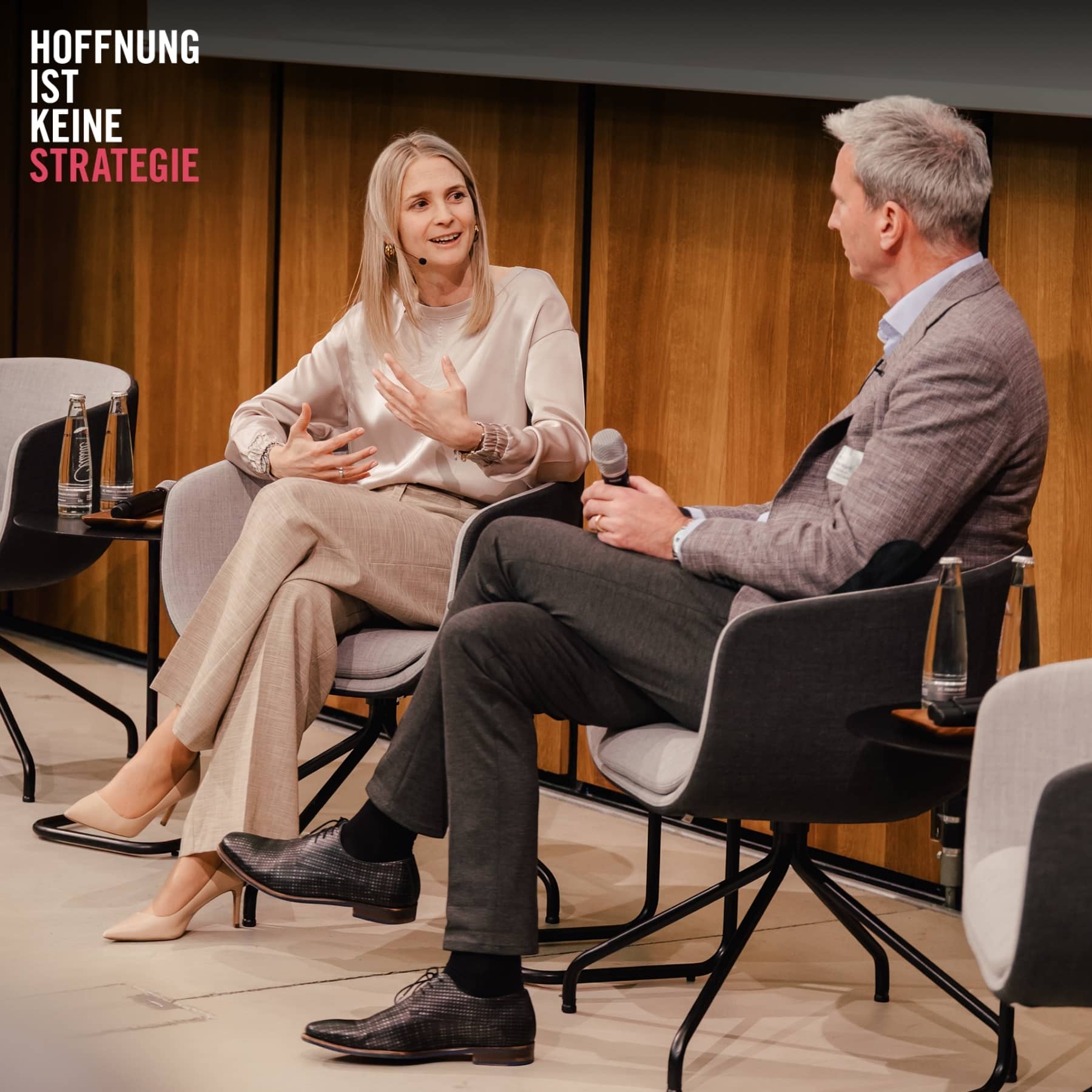
Artificial intelligence is currently reshaping nearly every part of a company. Strategy work is no exception. But can AI actually develop strategies? Or is it just one more tool in the modern executive's toolbox? Prof. Dr. Julia Hautz of the University of Innsbruck is exploring this question in an ongoing research study and offers fascinating insights into the future of strategic leadership.
The big AI expectation: strategy at the push of a button?
Many companies start working with AI with the same hope: upload your data, ask a question, get a finished strategy. Reality looks different. The first interviews in the study show that many executives initially hoped for a "magic button." One click that automates complex strategic decisions and radically simplifies the strategy process. That expectation went unmet. Instead of finished strategies, AI mainly supports analysis, structuring and documentation. The actual strategic work remains a leadership task.
Strategy gets more efficient, but not automatically better
One key finding so far: AI delivers significant efficiency gains. Information can be evaluated faster, market analyses produced more easily and large volumes of data processed in a structured way. Many of the companies surveyed report substantial time savings on administrative and analytical tasks. The real value, however, isn't just speed. The time freed up allows executives and strategy teams to focus more on the questions that truly matter: which decisions are relevant? Which opportunities are emerging? Which risks need to be factored in? AI handles the preparation. Strategic thinking stays human.
Open strategy: why more people make better strategies possible
For years, one focus of Julia Hautz's research has been the concept of open strategy. The idea: don't develop strategy in small leadership circles only, but bring the perspectives of many employees into the process. The challenge is that the more people are involved, the greater the complexity. This is exactly where AI shows its potential. It can collect, structure and condense large volumes of ideas, feedback and information. For the first time, that makes it realistic to include many voices in strategic discussions without drowning in information overload and coordination chaos. The surprising insight: more AI can lead to more participation and more humanity in the strategy process.
The real competitive advantage is still people
If every company has access to the same AI models, one crucial question arises: where does differentiation come from in the future? For Julia Hautz, the answer lies not in the technology itself but in the people using it. AI democratizes access to analysis and strategic knowledge. What used to be reserved for large corporations with extensive strategy departments is now within reach for mid-sized companies. The competitive advantage therefore doesn't come from using AI alone, but from the ability to mobilize your own employees' knowledge, creativity and perspectives better than others do.
The future belongs to multi-human AI systems
One of the most compelling propositions from the conversation: the future of strategy lies neither in individual people nor in individual AI agents. Successful companies will instead build what are called multi-human AI systems. In these, people and various AI applications work together on strategic questions. AI handles analysis, structuring and knowledge management. People contribute experience, contextual understanding, creativity and judgment. The real strength comes from the interplay between the two.
Decisions stay with the leadership
However capable AI becomes, one fundamental limit remains. Strategic decisions have far-reaching consequences for companies, employees and markets. They come with responsibility and often with ethical questions. The interviews paint a clear picture: companies want AI to provide decision support, scenarios and recommendations. But the final call should remain with people. AI can lay out options. It cannot take on responsibility.
Who this episode is for
This episode is for CEOs, managing directors, heads of strategy and anyone who wants to understand how artificial intelligence is changing strategy work. It shows why AI neither replaces strategy nor makes people obsolete. Instead, it opens up new ways to use knowledge, involve people and make better decisions.
🎧 Listen now and find out why the future of strategy isn't people or machines, but people and machines.
SHOW NOTES
Julia Hautz https://www.linkedin.com/in/julia-hautz-307504114/
Christian Underwood https://www.linkedin.com/in/christianunderwood/
Strategic Decision Intelligence: https://strategicdecisionintelligence.ai
"Hope Is Not a Strategy" magazine https://shop.strategyframe.ai/products/hoffnung-ist-keine-strategie-ii-1-strategic-decision-intelligence
All links https://linktr.ee/strategyframe