

Energy in transition: how municipal utilities secure their future strategically
This episode was recorded in German.
Municipal utilities under pressure: why transformation now demands strategic leadership
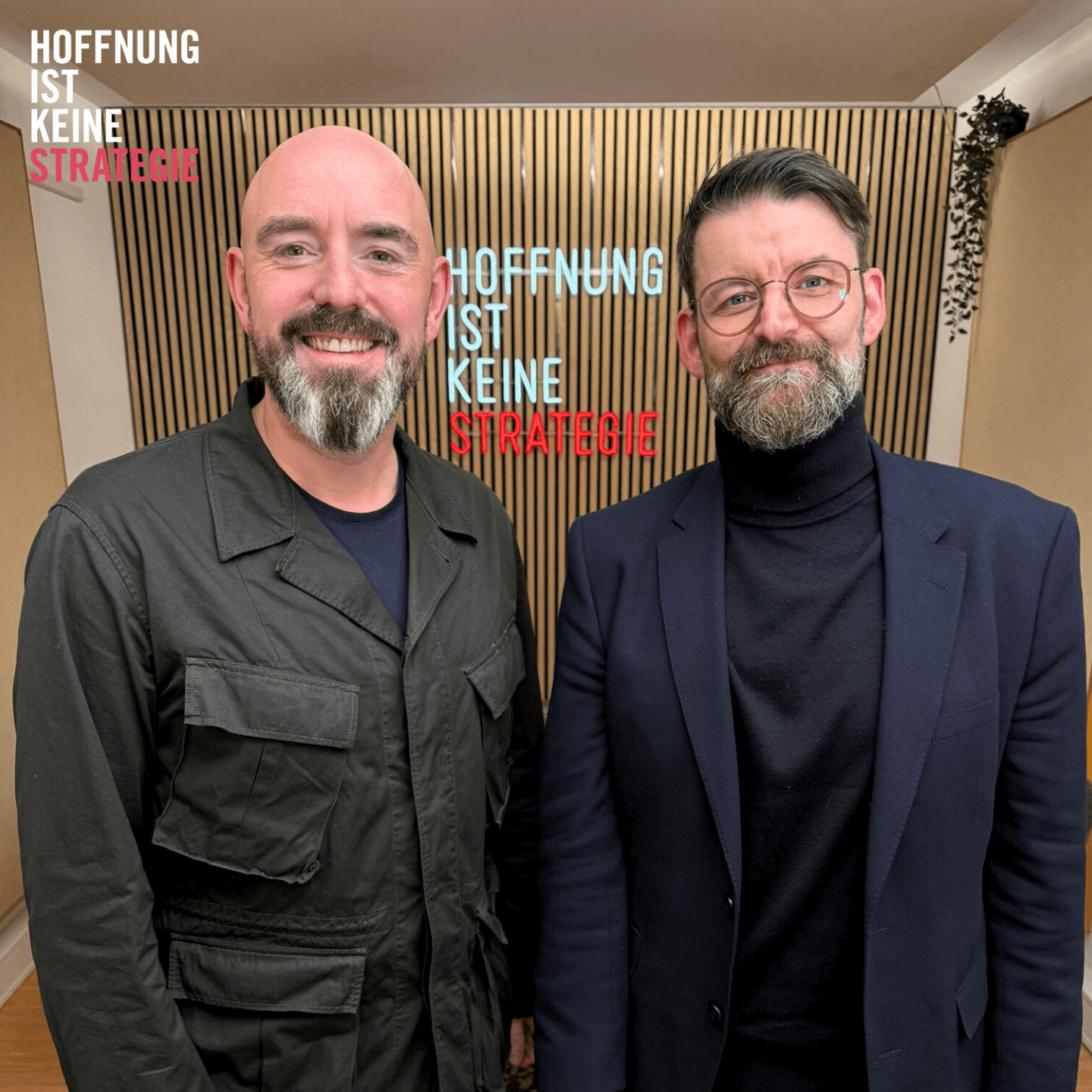
The energy industry is in the middle of a historic upheaval. What was long considered stable, predictable and heavily regulated is increasingly under pressure. In the latest episode of "Hope Is Not a Strategy," Christian Underwood talks with Dominik Wirth, CFO of Zwickauer Energieversorgung, about the profound transformation of municipal utilities, and about why hope alone is no viable plan for the future.
From reliable provider to permanent construction site
Decarbonization, digitalization and decentralization stopped being buzzwords long ago. They now shape the daily reality of municipal energy providers. Phasing out fossil fuels, the massive expansion of renewable generation and the electrification of mobility and heating all put new demands on grids and organizations alike. Add to that enormous investment needs, a shortage of skilled staff and a regulatory environment that leaves little room to maneuver. Dominik Wirth gives a vivid account of how much the role of municipal utilities has changed. Once-stable revenue models, in the gas business for example, are disappearing. At the same time, expectations around security of supply, grid stability and climate neutrality keep rising. That puts municipal utilities under pressure not only technically, but above all strategically.
District heating, grid expansion and new business models
One central topic of the episode is the heating transition. District heating is seen as one of the most important levers for climate-friendly heat supply in cities. But the build-out is expensive, slow and heavily dependent on political conditions. Dominik Wirth makes it clear: without planning certainty and public funding, this mammoth task is nearly impossible to manage. At the same time, municipal utilities have to open up new business areas to make up for lost revenue. The shift from classic provider to modern energy services company does not happen on its own. Partnerships, platform models and white-label solutions are becoming more important, not out of romantic notions about innovation, but because resources are scarce. Every strategic move has to land.
Strategy is not a side project
A key takeaway from the conversation: transformation cannot be managed on the fly. Municipal utilities generally know what needs to be done, but often lack the time to set clear priorities and deliberately rule options out. That is why Dominik Wirth argues for a structured, orderly strategy process. Not as a glossy concept, but as a pragmatic leadership tool that creates direction and focuses scarce resources. It is also about leadership and organization. Digitalization, automation and new business models change roles, skills and mindsets. Transformation is always a change project too, for leaders as much as for employees. A willingness to learn, a basic technical understanding and the ability to tolerate uncertainty become decisive skills.
Municipal utilities as regional anchors of stability
Despite all the challenges, one point remains central: municipal utilities are far more than energy providers. They are regional anchors of stability. They safeguard quality of life and make public transit, public pools and cultural offerings possible. That is exactly why their future is under such close scrutiny. Dominik Wirth is convinced that the structure of municipal utilities will change and consolidate, but their regional importance will remain. Models such as "the municipal utility as a service platform" could be a middle path between full independence and full privatization. Cooperation instead of isolation becomes the strategic principle.
Who this episode is especially relevant for
This episode is for managing directors, executives and decision-makers in the energy and utilities sector who no longer want to sit out transformation. It shows realistically, honestly and practically what it means to lead strategically in a highly regulated industry, with no sugarcoating, but with a clear point of view.
🎧 Listen now and understand why transformation is not a project with an end date for municipal utilities, but an ongoing strategic task.
SHOW NOTES
Dominik Wirth https://www.linkedin.com/in/dominik-wirth-5a2919187/
Christian Underwood https://www.linkedin.com/in/christianunderwood/
StrategySummit 2026 https://www.strategyframe.ai/strategysummit2026
All links https://linktr.ee/strategyframe