

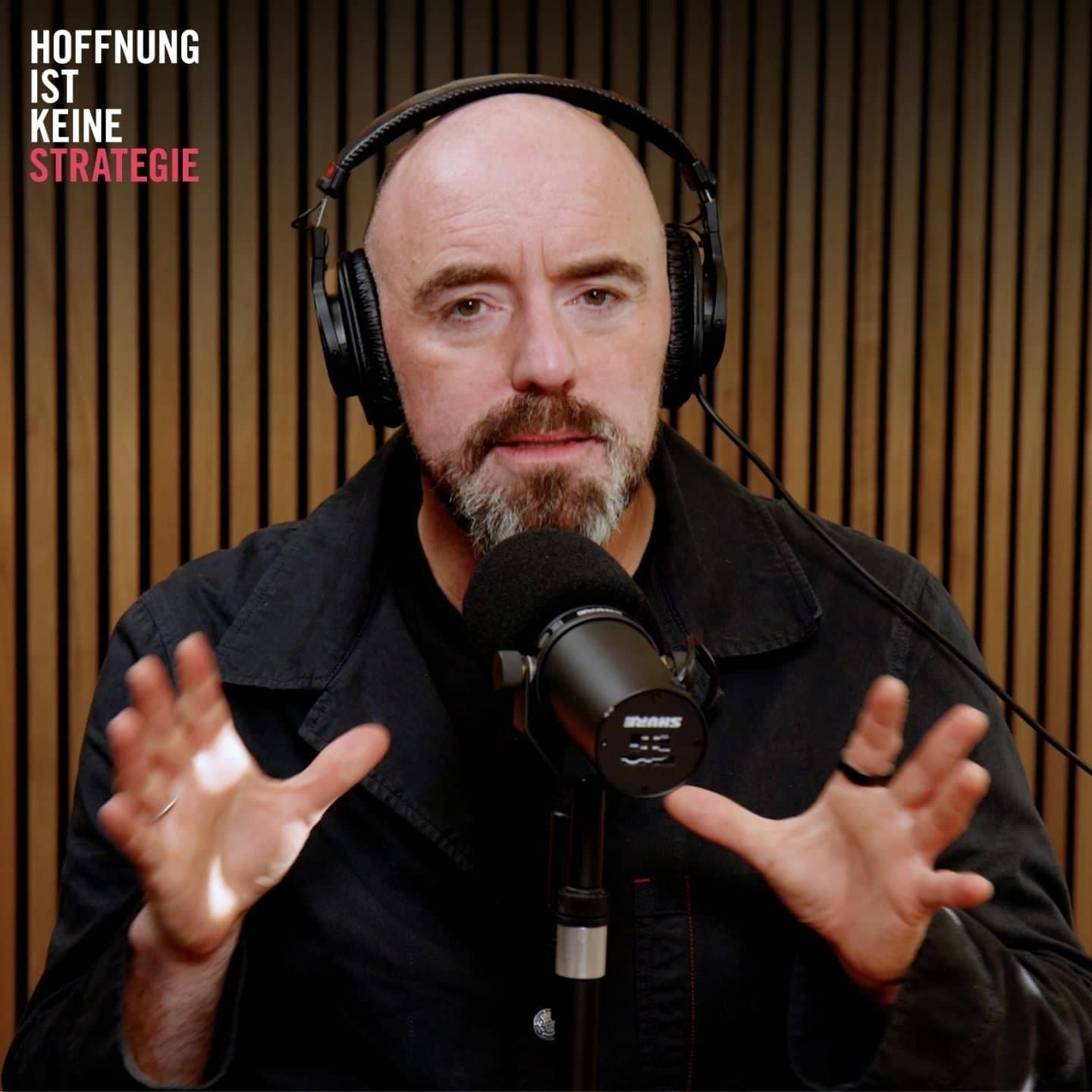
#95 Which customers actually make your company money?
This episode was recorded in German.
Strategy starts with the customer: how to identify your most valuable customers
At a time when markets are getting more complex, customer expectations higher and resources tighter, simply being "customer-oriented" is no longer enough. Anyone who wants to succeed in strategy work today has to do more than address the customer: you have to genuinely understand them. In the new episode of "Hope Is Not a Strategy," strategy expert Christian Underwood debunks the myth of customer centricity and shows what real customer focus looks like.
Customer focus is not a buzzword
Terms like customer centricity or touchpoint optimization sound good, but they achieve little without real substance behind them. Many companies know their own customers only superficially. Who are the top 10 customers, really? Which customer segments actually contribute to profit? Questions that go unanswered alarmingly often. Christian Underwood talks openly about how organizations hide behind methods and buzzwords instead of analyzing the obvious: which customers create value, and which only cost time and money?
Understand the 80/20 rule, then use it
The famous Pareto principle applies here too: 20% of your customers often generate 80% of your revenue. But which 20%? That is exactly where this episode starts. It's about how structured customer classification and clear segmentation reveal where the real potential lies, and what strategic conclusions to draw from it. Whether through revenue, contribution margin or loyalty analyses: ask the right questions and you get clear answers, and you can align sales, marketing and the organization accordingly.
From analysis to strategic direction
Customer analysis is not an end in itself, it's the starting point for strategic focus. If you know your A customers, you can steer sales more efficiently, deploy resources more sensibly and even discover new potential in the market. Christian Underwood puts it clearly: "Without clear customer data, there is no meaningful strategy. And without strategy, there is no growth." This isn't just about numbers, it's also about qualitative factors like market potential, loyalty or logistical complexity. All of that belongs in the assessment, and it's the basis for redefining sales territories, target pictures and value propositions.
A case for clarity
This episode is for managing directors, strategy leads and sales directors who want to know where their company really stands, and where it can go from here. It makes the case for more clarity, more structure and real customer understanding in strategy work. As Christian says: "Without customers, you don't need a strategy. And without a strategy, you won't reach the right customers."
Listen in now and find out how to identify your strategically most important customers and position your company for the future.
SHOW NOTES