

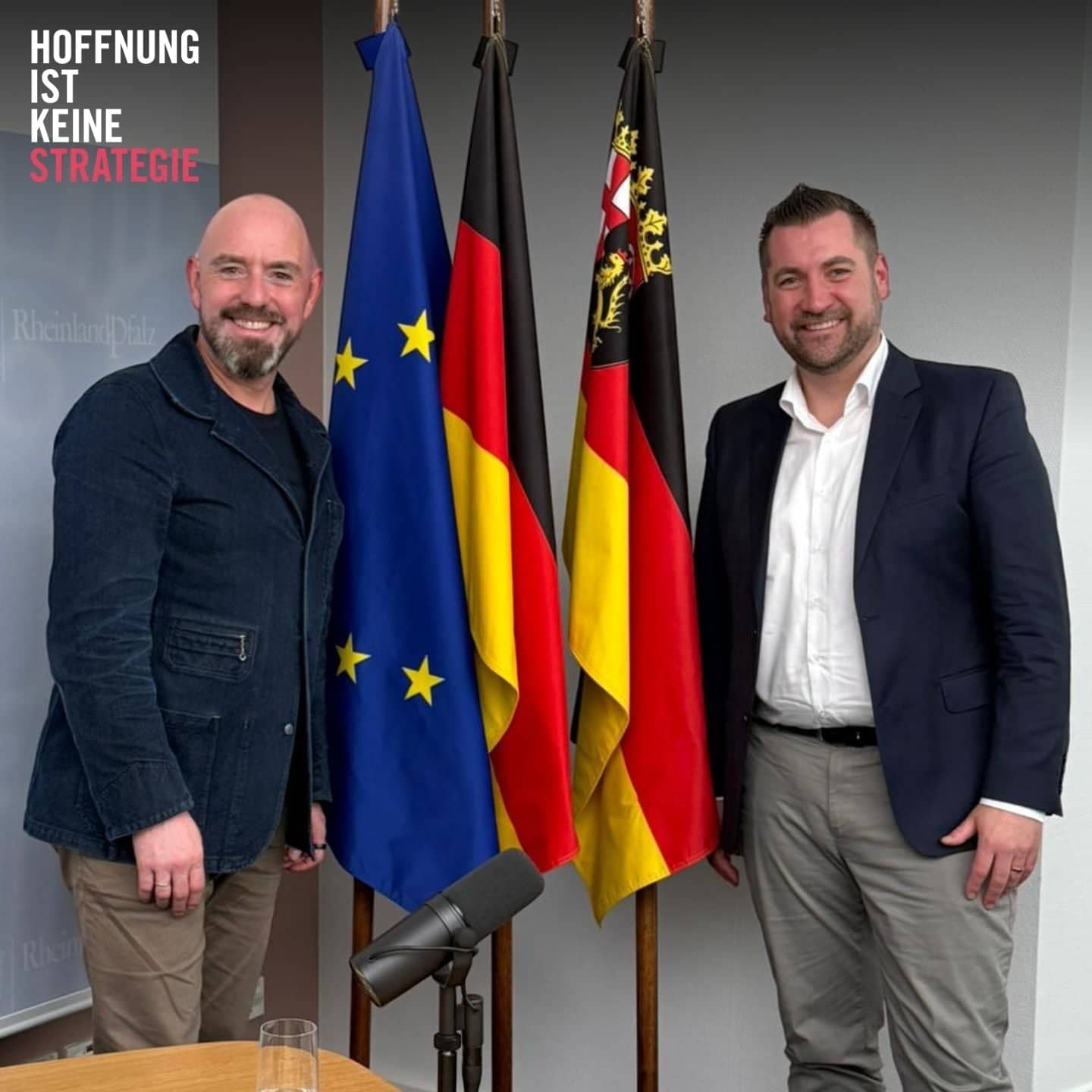
Strategy instead of bureaucracy: Dr. Fedor Rose on how politics has to change now
This episode was recorded in German.
Dr. Fedor Rose on modern politics: why the future only works with strategy
Politics today has to be more than just reacting. In a world where social expectations, technological possibilities and geopolitical realities keep shifting, we need new answers. In our latest podcast episode, Dr. Fedor Rose, Head of the State Chancellery of Rhineland-Palatinate, shows what political leadership has to deliver in the 21st century, and why real modernization starts with strategic thinking.
Rethinking public administration
Many people associate public administration with standstill, red tape and resistance to change. Dr. Fedor Rose clears up these clichés. He describes how a modern state chancellery works today: as the interface between political leadership, coalition work and strategic planning for the future. His conviction: only those willing to question existing processes, routines and responsibilities can keep the state capable of acting. For him, administration is not a bureaucratic relic but an underestimated lever for transformation, provided you modernize it boldly. He speaks openly about the challenges and the system's internal inertia, but also about the concrete progress Rhineland-Palatinate has made along the way.
Strategy instead of symbolic politics
One central point in the conversation: politics must not get lost in symbols or headlines. It needs a long-term strategic direction, and the will to tackle unpopular reforms as well. Dr. Fedor Rose describes how political leadership works under pressure, how coalitions can work together as equals and why shared goals matter more than party-political vanity. His approach is pragmatic, but not technocratic: for him, strategy means creating clarity about the "why," setting priorities and then executing with conviction and consistency.
Digitalization alone is not enough
Dr. Fedor Rose comments on the debate about a possible digital ministry with a clear view: the decisive question is not whether a new department is needed, but whether political and administrative structures will finally be designed so they can actively shape change. Digitalization must not become a fig leaf. What matters is understanding the state as an organization capable of learning, simplifying processes and having the courage to let go of what is no longer fit for the times.
Leadership through trust, not control
Another key message: good political leadership does not come from power or control, but from trust, transparency and collaboration. Crisis situations in particular, from the pandemic to the floods, show how important reliable structures, fast communication and mutual respect between politics and administration are.
Take responsibility, shape the future
For anyone carrying responsibility in politics, public administration or leadership, this episode offers valuable insights and ideas. Listen now and find out how to plan the future strategically and make it politically possible.
**SHOW NOTES**